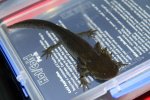
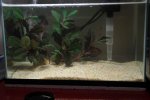
Axolotl eating its own foot!!

Eyezax

New member
Joined
Apr 18, 2016
Messages
8
Reaction score
0
Points
0
Location
Australia
Country
Australia
:eek:

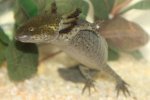
We have only had Yoda for 1 week. He is incredibly active. First couple of days he was fine but then started to sustain damage to his tail (I suspect from a tank ornament that had rough edges which I promptly removed) looked like it was being shredded... which was made worse by him whipping it back and forth as he moves around the floor of the tank which has fine sandy gravel (recommended by the aquarium store). After reading several threads on here I think I will be removing the gravel. The tail looks ok, I've been watching it closely to make sure it doesn't start getting infected. Then 4 days ago Yoda started biting his own foot. He has bitten all the flesh off one toe... it just has a skinny little bone sticking out where the toe used to be, it is the weirdest thing and I haven't been able to find any threads or info on why this is happening or how to stop it. I think this guy is a little crazy!! It's like he catches sight of the foot out of the corner of his eye and snaps at the movement not realising it is his own foot?? I thought maybe he was overly hungry as he is so active, so we've been feeding him daily...some nice juicy worms from the garden (organic!!). Just this morning there is a deposit around the base of the rock/plant ornament at the back of the tank which looks like sperm?? Slightly cloudy and settled on the base all the way around the plant. Could his behaviour be territorial/hormonal aggression? What can I do about the toe? Help! We are complete novices and have not been given the right advice from the Aquarium. Thanks.
 
I have posted some general advice on your other thread, but this behaviour is definitely weird. Do you have any idea how old Yoda is? And could you perhaps post some photos? S/he may be stressed (light, water current, water quality, water temperature) and/or 'he' may be producing sperm. I'm wondering whether temperature may be contributing to the high activity levels.

Meanwhile, with the injuries to the foot and tail, water quality becomes even more important to avoid fungal or bacterial infection. Perhaps adding Indian almond leaves or tea to the tank water would help (there are threads about this on this site).

There are many Caudata members with way more experience than I have, and I am sure some of them will have suggestions for you. In order to help, they will need readings of the ammonia, nitrites and nitrates in your tank, water temperature, pH, and photos of your lotl, so please post this information asap.

These little guys have incredible regenerative abilities, so as long as you make sure the water conditions are ideal and stress is minimised, your lotl's injuries should heal.
 
Thanks Sweetie. I don't have any water readings ( I've explained in my reply to your advice on my post in the 'introductory' forum). How do I post a picture on here? Thanks!
 
Your Axolotl may well be mistaking its foot for food or possible something is irritating the foot causing your Axolotl to snap at it, I only consider this since Axolotls have been known to scratch at their own gills due to parasites.

Can you take images of your tank, Axolotl, and the substance you found around the plant/rock ornament?

Thanks Sweetie. I specifically asked the aquarium guy if I needed any kind of test kit for the water and he said no! ( that I should be fine for now and consider getting one in the future). He also said I shouldn't have to worry too much about temperature as it is autumn coming into winter (but here in Sydney daytime temperatures are still well into the 20's!) Almost everything he told us I now find out is wrong :mad: He also suggested the coarse sandy gravel base which I'm sure contributed to Yoda's tail injury. (and I also now understand could be swallowed!).... So, I have no water readings at all, I think I was just lucky I am using a second hand tank and filter which I filled up and left running for a couple of days before buying the little guy. It definitely smelled 'fish tanky' so maybe some residual bacteria in the filter had begun to..'cycle?' the water. At least I knew enough to use water conditioner. So I will go buy a test kit and a thermometer. In the meantime I have moved him into a holding container which I am keeping cool by sitting it on top of a first aid gel cooler pack (swapping with a cooled one from the freezer every couple of hours) and I'll change his water daily until I can make sure his tank is safe. Even in the cooler water he is still moving constantly. Honestly, if I had known how complicated it is to care for an Axolotl properly I don't think I would have bought him. If he gets sick from all this I will be returning to the aquarium store one very unhappy customer!!:violent:

I would not ask for anymore advice from where ever you bought your Axolotl from. Being able to test for Ammonia, Nitrite, NitrAte, and PH is very important as you must be able to know the environment your Axolotl is living in is healthy. As well as the tank water being the correct temperature.

You will need to read up on cycling so you understand the basics of the Nitrogen Cycle.

Read these articles thoroughly:
Caudata Culture Articles - Water Quality
Caudata Culture Articles - Cycling
Axolotls - Requirements & Water Conditions in Captivity

To test your water you should purchase the API Fresh Water Master Kit:
Welcome to API Fishcare: FRESHWATER MASTER TEST KIT
You can purchase this from most aquatic stores, its important to get this liquid test kit as it give the most accurate test results, most users of this forum recommend and own one.

I don't know how long the tank your using was left without water in it before you added your Axolotl, if the tank and filter were dry before you added your Axolotl and water then any beneficial bacteria that may have existed will have died off. But even so, if the tank had a 'fishy' smell you should have wiped down and thoroughly cleaned the tank before adding the new Axolotl. The tank could have been contaminated with diseases from the fish which could affect your Axolotl.

Keeping your Axolotl in a separate holding container is the best idea for now with daily water changes using dechlorinated water.

Also, bare in mind that nearly all Australians that keep Axolotls have serious issues keeping the tank water around 16-18 degrees Celsius, this will likely be the case for you as well so you will most likely need to look at purchasing a chiller to keep your tanks temperature safe so your Axolotl does not get stressed or become susceptible to disease.

Read these websites thoroughly, the information is key to caring for Axolotls:
Axolotls: The Fascinating Mexican Axolotl and the Tiger Salamander
Caudata Culture Axolotl Articles
Axolotl Sanctuary
 
Hi Chris, thanks for all that info. The tank still had water in it, we got it from our neighbours who are moving house... (I'm not sure what happened to its previous inhabitants??). We emptied it out, cleaned it thoroughly with tap water and then filled it up (tap water) and left it to sit with filter running for a couple of days (I haven't described the smell properly.. not 'fishy' but aquatic... like a creek bed??)... we went to the aquarium for goldfish but the kids fell in love with the axolotl. I hadn't any knowledge of care, water, housing for an axolotl. I had no reason to think I couldn't trust the advice they gave us... Is this common to be so misinformed by an aquarium store? Don't they care about what happens to these guys after they go home with their new owners? I will be getting a test kit ASAP. Thankfully he has stopped nipping at his foot now (toe is completely gone). How do I post photos on here?
Thanks again :happy:
 
Unfortunately it is very common for pet stores to give misleading advice. It is important to do your own research from multiple sources than rely on advice from one store. Not all stores are bad but it is best to assume that they don't have all the necessary information or all the correct information and do your own research.

Are you using a dechlorinator? If not, you should pick some up as straight tap water has chemicals and heavy metals that will harm your cycle and kill off beneficial bacteria and also irritate your axolotl. Whilst chlorine dissipates over time, it is still important to use a dechlorinator to remove chloramine and heavy metals that don't dissipate. Usually here they are called water conditioner.

To post photos, when you make a post, click the "Go advanced" below the text box and then there is a paper clip symbol that will allow you to upload photos. AxolotlChris is better at explaining how to post photos though.
 
Skudo is right about aquatic stores, some are very helpful and knowledgeable, but always get multiple sources of information, 'don't put all your eggs in one basket'. It's just quite common to get misleading information from a lot of them.

Perhaps there is a chance the filter still contained some beneficial bacteria, but it all depends how long the filter was without water or turned off for.

I did see that you wrote you have used a 'water conditioner', which one are you using?

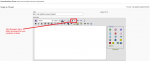
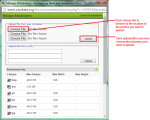
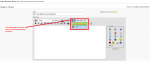
To post pictures:
paperclip.png

choosefile.png

addpictures.png

Once you have a test kit you can begin to properly manage your cycle and see what stage it is at. You should look at purchasing liquid ammonia, so that you can cycle your tank without using your Axolotl as the source of ammonia, since ammonia is toxic. This is known as a 'fishless cycle':
Fishless Cycle - Cycle Your Aquarium without Using Fish
 
Thanks Chris and Skudo09,

I will try and upload some photos now. The water conditioner is 'Aquatopia Water Safe'. I did put it in the tank when we first filled it up and have also put it in his holding container (although had to guess how many drops as it is only a 3.5L container). I will have a crack at those photos now.
 
I'm not familiar with that brand of dechlorinator, and I can't find much reference of it online, other than a website selling it.

I would recommend using a dechlorinator such as 'Fluval Aqua Plus' or 'Tetra Aqua Safe', these are well known trusted brands. 'Seachem Prime' is also a recommended brand but is highly concentrated compared to other brands, it also conditions the water by detoxifying ammonia, nitrite, and nitrAte for up to 48 hours.

A couple drops should suffice for your small container, always make sure you add dechlorinator to water before you add it to your tank or container so that the dechlorinator is well mixed with the water before, other wise if you add it after directly to the container or tank it could find its way into your Axolotls gills at a high concentration before it mixes with the water, which could be fatal. I always add dechlorinator to an empty bucket and then fill that bucket with water before adding it to any tank or container.
 
Have just attached some photos... I think... let me know if you can see them....
 

Attachments

  • IMG_4451.jpg
    IMG_4451.jpg
    54 KB · Views: 1,623
  • IMG_4465.jpg
    IMG_4465.jpg
    91.4 KB · Views: 442
  • IMG_4475.jpg
    IMG_4475.jpg
    67.8 KB · Views: 528
If you look very closely at the base of the rock/plant you can just make out the cloudy substance I mentioned earlier. It forms a ring all the way around the darker grey piece of rock. Hard to see, and I couldn't really get a closer picture of it. It is not dispersing in the water, I feel like I should try and syphon it out? I'm thinking this tank may be a little small too? Was told it would be fine until he grew bigger... but he's already a fair size (about 8 inches long nose to tail) Isn't this close to adult size? Is it actually a male do you think? I was basing my assumption of its sex on the length of its tail which seemed quite long to me and several things I read said females had a shorter stubbier tail, but please correct if you think/know differently.
 
I can barely make out the cloudy substance, can you try taking up close pictures? It wont be spermatophores..

The tank size is too small for a full grown adult but will suffice for now, but you will need to upgrade to a larger tank in the near future. You will also need to remove the gravel you are using since it can cause impaction. Sand or slate is a better option, or bare bottom.
Caudata Culture Articles - Aquarium Substrates

You should look for more hides, Axolotls should have at least 3 hides for them to use for security/comfort.

You judge the sex by the cloaca, read the bottom of this article: Axolotls - Biology
 
General chit-chat
Help Users
  • No one is chatting at the moment.
    There are no messages in the chat. Be the first one to say Hi!
    Back
    Top