Question: Initial Tank

Kib0y

New member
Joined
Dec 18, 2009
Messages
45
Reaction score
3
Points
0
Location
Western New York
Country
United States
I am a new axie owner and beginning to become infatuated with them. I have two axies, which I have received from my biology department and are still pretty young. I do not know their exact age so I'm kind of hoping someone could tell me the age of mine roughly, to start off with. I have attached a photo (a crappy one because its off my camera phone and the lighting is terrible). The front limbs are fully developed and functional when he/she swims. He is roughly an inch-inch and a half, and the hind legs are there but not even close to be developed. I'm starting to see some pigmentation develop on the front limbs.

ANYWAY, to my REAL question. When is the earliest to transfer an axie of young stature to a 10 gallon tank? I have been looking at the photos of many tank set ups and I would like to appreciate a nice homey setup for looks in my home as soon as possible. The problem I am facing, which really isn't a problem but more of an annoyance, is feeding. I am feeding them frozen foods right now and I'm dropping it above their heads to let them eat instead of wiggling it in front of their face with forceps. This is very messy, if you can imagine. So I don't really want to be playing water plenko with food if I put them in such a large tank this early lol. Any suggestions on training them to come to you to eat off the forceps quicker?

Currently I have them in a 1 gallon tank, half full. I have a small filter running (when it decides to work...). The water is constantly cloudy due to feeding and such, so I would like to get a nice roomy, homey, and more permanent establishment that is easier to control water parameters easier as soon as possible.

Thanks for your guys' information.
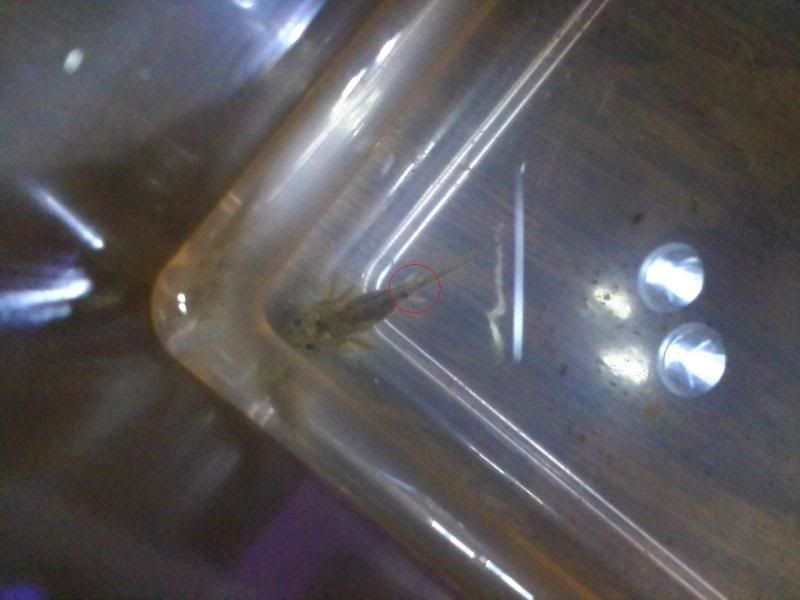
1221090004.jpg
 
From my experience it is easier to keep guys this size in small containers and do 100% daily water changes (right after they've eaten). I know it sounds like a lot of work but it's really not. Once they reach about an inch and a half or two inches then that is when I switch them to larger tanks.
 
Seems like they're already big enough to switch tanks to me. As for feeding them the best method I've found is to feed by hand, if they're hungry it will usualy be eaten only moments after being in front of there faces. Just make sure the food is small enough for them to easilly swallow or it can take them a few tries to get it.
When mine where young I had to chop the frozen pieces of meat I brought for him in half, otherwise he had trouble eating them.
 
Last edited by a moderator:
I would say that it's much easier to feed them in a smaller container when they're this young. I understand that you're eager to get them in their 'proper' home, it's exciting isn't it? While they're in the smaller container you can 'train' them to take food from your fingers or tweezers, whatever you want to use, then once you move them to their bigger home they'll be used to that way of feeding.
 
So the overall consensus is that they are pretty much big enough for a 10 gallon tank however it is easier to train them to eat from tweezers in a smaller container and I should not switch them to a bigger tank until I have them fully trained to eat this way. All right, great. Thanks.
 
I have some babies that are just gettin back legs they are around 3 months old i think they are slow developing because of the cold weather. I would recommend live food at that age, doesn't spoil the water as much and you dont have to watch to check they've eaten it. As they will when its wriggling! Mel
 
So the overall consensus is that they are pretty much big enough for a 10 gallon tank however it is easier to train them to eat from tweezers in a smaller container and I should not switch them to a bigger tank until I have them fully trained to eat this way. All right, great. Thanks.

Well...that is not the "consensus" I read from the former posts. As Greatwtehunter and Kerry said, it is much easier to keep them in smaller tanks and do a complete change of water every day.
Of course you may keep them in bigger tanks (their ancestors used to live in a lake at least), but that might be much more difficult to feed them and keep an eye on them.

And I personally would not try to feed them from tweezers at this stage - I mostly feed them with frozen bloodworm and they pick it up from the bottom of their container.
 
Daniel: At this stage in development, do they know that it's food? I feed these guys frozen blood worms and frozen brine shrimp. The one doesn't really snatch at the food unless I drop it in the water above his face. It seems he's reacting to the motion still instead of using his smell to notice it's food.
 
To my knowledge (and experience) they develop their olfactory sense when they begin to start to grow their first (front) legs. From this time on they should be able to detect food by its smell, not just by its movement.

When I raised larvae, I started to feed them "dead" food (frozen Daphnia, Bloodworms) when they had their front legs developed. And it worked fine for me.
 
Maybe I'm feeding him to frequently so he's not hungry enough to eat the blood worms on the ground lol
 
Hi there, I am a newbie at this, have 2 axies, both have their rear legs. I am feeding them on Bullock Heart, and they absolutely love freshly decapitated crayfish, but how do I feed them frozen stuff? Do you defrost it first or feed it in little icy bits? Also I have seen some fish I can breed for them. I bought some and cut them up like bait but they did not want it. Do you have to mash it or something first? Or should they eat the fish live and wiggling? I did try this but I guess the fish was too big - it was as long as the axie's head is across. If I have fresh brine shrimp should I kill them or just put them in the tank?

Lotsa questions, but it is bugging me. One of them is quite happy to start chomping on me and the other one does not want to have anything to do with me at all, hides and only eats once every few days.

floosy
 
Hi Floosy,

The best type of food for your axie depends on its age. Larvae thrive on live daphnia and brine shrimp whereas older axies from juveniles to adults do better on a staple diet of earthworms, blackworms and good axie pellets. Any other meat type, including feeder fish, shrimp, crayfish and beef heart are suitable only as occasional treats as they do not contain all the essential nutrients for healthy growth and development.

Have a read through the links under the feeding section.
Caudata Culture Articles

It is best to thaw out and rinse any frozen food before feeding. Live food is superior so if possible feed live worms and such.
 
General chit-chat
Help Users
  • No one is chatting at the moment.
    LlamaLand: Could you send some images? +1
    Back
    Top