rocks for grounding

Plonk

New member
Joined
Oct 10, 2007
Messages
86
Reaction score
0
Points
0
Location
Brisbane
Country
Australia
Display Name
Plonk
I came up with an idea this mornin of instead of going to a petshop and spending a fortune on rocks/gravel for the ground in my 4ft tank, that I could go to a landscaping place and buy some larger rocks from there and do what I need to do to them for the tank. Do you think that this would be ok to use. I have been to aquarium shops and petshops and they want $10 for a bag of rocks that would suit the axies, the bags are small and I would need more than 5 bags to cover the bottom of my tank. Some help on this issue would be much appreciated.
 
One good option is: don't use any. Even if the rocks are large enough to avoid being ingested (important!), they trap dirt and make it hard to clean. If you really must have rocks, you may be able to find them outdoors. Just boil them to remove dirt and kill germs. And stick to a sparse single layer, so cleaning is easier.
 
But if I dont use rocks wont it be hard for the lil guys to grip on the bottom of the tank and it look more unatural to them by only having glass beneath them?
 
Have you tried home depot or lowes?They sell bags of gravel and larger rocks way cheaper than pet shops.
 
They are large home improvement stores that sell everything from lumber to plumbing supplies. They generally have large outdoor and garden departments as well.
 
Another option is fine sand. It can be cleaned with a siphon with a gravel-washing attachment. Again, I'd recommend only a thin layer of it.

In my opinion, they don't seem to mind walking on bare glass. But I know some people do feel strongly that axolotls are more "comfortable" with a substrate to walk on.
 
I agree with Jennewt. We have axies both on sand and bare glass. The glass is much easier for cleaning/feeding and our axies aren't stressed (they actually find their food easier, as worms/food won't get buried in substrate/sand).
 
Another option is fine sand. It can be cleaned with a siphon with a gravel-washing attachment. Again, I'd recommend only a thin layer of it.

In my opinion, they don't seem to mind walking on bare glass. But I know some people do feel strongly that axolotls are more "comfortable" with a substrate to walk on.


What exactly is involed in doing this and how much would the equipment cost?
 
If you intend going the sand route, you can purchase this from any hardware store or garden centre (eg: Bunnings, Mitre 10 etc...); ask for playsand, it's much cheaper than buying it from a petshop and you get about a 25kg/l bag of the stuff. You can also purchase a pool filter sand which is much finer and lighter in colour.

Sand would then need to be washed/rinsed until it runs clear. Some people put it in pillowslips and put under tap or hose until the water runs clear from the pillow. Or decanting sand from one bucket to the next using running water.

Once sand is added to the tank (only need a bare amount, approx 1-2cm to cover the floor; no need for sand dunes!); this can take a few hours to couple of days to settle (it becomes cloudy). Ours have only ever taken an hour to couple hours at most; other people's sand have taken a number of days (it may be because they had really fine sand or needed rinsing more).

A gravel/siphon cleaner can be purchased from petshop (the gravel head attachment can be detached and is included with some siphons - looks a bit like one of the vacuum heads!)

Sand will go up the siphon when waterchanging/siphoning, but it's easy to enough to bang it gently as you're siphoning and it falls back into the tank.

Sand price should be about $8-$12 at the hardware store (a large bag)(taking a guess based on some of the Aussie posts I've seen); siphon/gravel cleaner can range from $15-$30. Try and get the fatter tubed ones if you can. We have a thin tubed one and a fat tubed one. I've found the thinner ones don't have a very good suction rate especially when trying to suck up waste/axie poo (it falls back down)
 
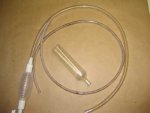
A gravel washing siphon is just a piece of tube + fat end. In the "fat" part of the siphon, the water flow is slower, so the sand settles back to the bottom, while the dirty water goes into the tube.

Here is a photo.
 

Attachments

  • siphons.jpg
    siphons.jpg
    22.9 KB · Views: 287
General chit-chat
Help Users
  • No one is chatting at the moment.
    RyanLHawk: Spotted +1
    Back
    Top