
Ryan-Broady
New member
Hi Guys,
I'm a new axolotl owner and have had Larry (my axolotl) for 5-6 months now. Recently, I've started noticing that Larry isn't eating and she's starting to act differently. She doesn't move as much as she used to and shes started digging. I didn't really think anything of it but then she started dry heaving yesterday (This is when I noticed it, I'm not sure if it's happened before). Larry hasn't really been eating for a few days now. She's been on bloodworms since I've had her but a few weeks ago she started losing her appetite and eating less and then it turned to not eating anything at all. I've tried Daphnia and larry just turns her nose up at it. I've moved over to earthworms and for about 2 days she was eating them but now she won't touch them. I tried her again with bloodworms today and she walked away from them. I've done some research and they all point to stress of some kind but the water tests are coming back good (pH of roughly 6.4-7, no nitrate or nitrite, low levels of carbonate). So ive ruled out water chemical stress but I could be wrong. I've thought about the water flow is too strong so ive raised my pump above the water and lowered the power of it too as little as possible. I have also noticed a degradation of her tail. It almost looks like its wilting so any information on this would be massively appreciated. I've put in a picture of the tank, im aware that there is no covers for larry to hide and im currently looking at getting some plants and a main feature that she would enjoy. I'm a little worried about getting the wrong plants or where to get them so any information on the best plants etc would be appreciated (also the light is rarely on and has been used today for the pictures)
I'm a new axolotl owner and have had Larry (my axolotl) for 5-6 months now. Recently, I've started noticing that Larry isn't eating and she's starting to act differently. She doesn't move as much as she used to and shes started digging. I didn't really think anything of it but then she started dry heaving yesterday (This is when I noticed it, I'm not sure if it's happened before). Larry hasn't really been eating for a few days now. She's been on bloodworms since I've had her but a few weeks ago she started losing her appetite and eating less and then it turned to not eating anything at all. I've tried Daphnia and larry just turns her nose up at it. I've moved over to earthworms and for about 2 days she was eating them but now she won't touch them. I tried her again with bloodworms today and she walked away from them. I've done some research and they all point to stress of some kind but the water tests are coming back good (pH of roughly 6.4-7, no nitrate or nitrite, low levels of carbonate). So ive ruled out water chemical stress but I could be wrong. I've thought about the water flow is too strong so ive raised my pump above the water and lowered the power of it too as little as possible. I have also noticed a degradation of her tail. It almost looks like its wilting so any information on this would be massively appreciated. I've put in a picture of the tank, im aware that there is no covers for larry to hide and im currently looking at getting some plants and a main feature that she would enjoy. I'm a little worried about getting the wrong plants or where to get them so any information on the best plants etc would be appreciated (also the light is rarely on and has been used today for the pictures)
Attachments
-
 20200524_155402.jpg870.7 KB · Views: 504
 -
 2nd tail wilting.jpg494.7 KB · Views: 271
 -
 3rd tail wilting.jpg564.7 KB · Views: 281
 -
 Larry 4.jpg2.1 MB · Views: 285
 -
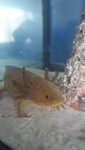 Larry 3.jpg757.9 KB · Views: 271
 -
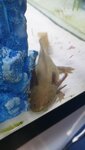 Larry 2.jpg870.7 KB · Views: 286
 -
 general appearance.jpg979.1 KB · Views: 334
 -
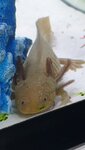 Larry 1.jpg676.1 KB · Views: 291
 -
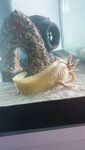 Tail wilting.jpg803.5 KB · Views: 276
 -
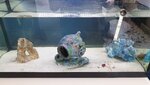 Tank.jpg2.6 MB · Views: 273

