amary
New member
- Joined
- Jan 7, 2016
- Messages
- 15
- Reaction score
- 6
- Points
- 3
- Location
- Sofia, Bulgaria
- Country
- Bulgaria
- Display Name
- amary
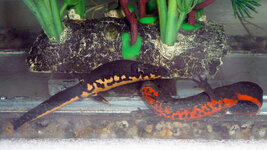
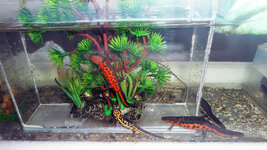
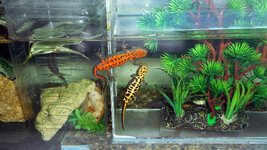
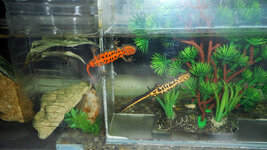
During long-term captive care and breeding of Cynops orientalis (over 10 years), I observed a small number of offspring showing unusually bright yellow ventral coloration.
This coloration differed clearly from the typical red to orange ventral range commonly seen in the species. While I am aware that diet and carotenoid content can influence ventral color intensity in Cynops, the uniform yellow coloration observed in these individuals appeared atypical based on my experience and available literature.
Unfortunately, this lineage is no longer present, and no further breeding was possible. However, I am sharing this as a documented observation supported by photographs and video recordings.
An earlier discussion with additional images was documented on a local Bulgarian amphibian forum (link below). The content is in Bulgarian, but the images may still be of interest as a historical reference.
This coloration differed clearly from the typical red to orange ventral range commonly seen in the species. While I am aware that diet and carotenoid content can influence ventral color intensity in Cynops, the uniform yellow coloration observed in these individuals appeared atypical based on my experience and available literature.
Unfortunately, this lineage is no longer present, and no further breeding was possible. However, I am sharing this as a documented observation supported by photographs and video recordings.
An earlier discussion with additional images was documented on a local Bulgarian amphibian forum (link below). The content is in Bulgarian, but the images may still be of interest as a historical reference.
Създаване на селекция тритони с ефектна и нетрадиционна окраска
Създаване на селекция тритони с ефектна и нетрадиционна окраска
aquariumbg.com