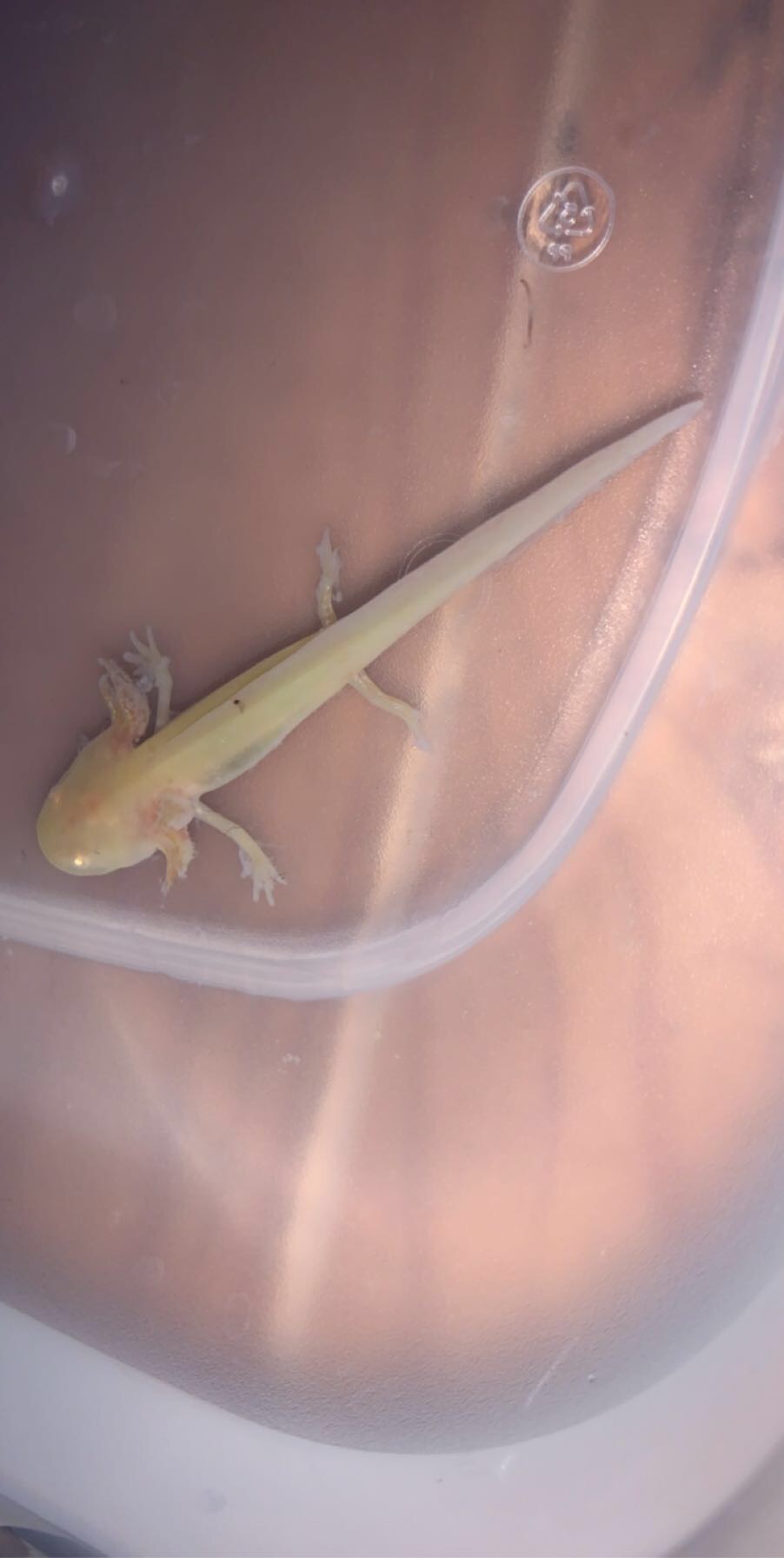
A baby axolotl with a maybe fungus?

ADelaney

New member
Joined
Mar 29, 2017
Messages
9
Reaction score
0
Points
1
Location
Maryland, United States
Country
United States
Display Name
Alyssa
Someone reached out to me today through a mutual friend because I’ve had axolotls for the past 3 years but this one is strange to me.

This girl got her axolotl yesterday and it’s already showing signs of stress and fungus but I’ve never seen fungus like this before. It almost looks like it’s skin is shedding off of it. It’s gills are forward and it’s tail is curled. I only have the one photo but the fungus/shed/something is all throughout the water. I will note that it hasn’t been in a cycled tank but just a tub getting 100% water changes while her tank finishes cycling and I don’t know where she got the axolotl from. I’ve advised her on fridging and salt baths just in case it is fungus but I’ve never seen fungus like this. Does anyone know more? Thank you.
0D6D098A-FFB7-4923-83E7-26228A46228B.jpeg
 
That's extensive slime coat/skin damage. Last time I saw something like that, it was on a rescued jumper in the lab who'd been exposed to the air for an unclear period of time. (Lil guy survived! Probably wasn't good for his systemic health, though.)

Important checks:
  1. Is she USING dechlorinator?
  2. Is she using the RIGHT AMOUNT of dechlorinator? (I have an animal with long-term damage because several years ago I lent him to a friend for a few days and screwed up the instructions on how to administer dechlorinator...)
  3. Has the tub EVER come in contact with soap? If so, how thoroughly washed was it before use?
  4. How is she doing the 100% changes? It's easiest with animals that are of a reasonable size to have two tubs and gently hand-scoop the animal from dirty to clean, or to use a designated strainer with soft-edged holes too small for it to fit limbs through and carefully pour the animal in before transferring it. Leaving the animal in the scoop while you clean is impractical for inexperienced cleaners, and could explain why he looks like he was exposed to air for an extended period of time.
 
To add to BenWn:

NO SALT BATHS.

This is indeed damage to the slime coat/skin. Salt baths are terrible for an axolotl's skin. In case of fungus it can be the lesser of two evils, but right now it would only be further damaging an already damaged skin.
 
That's extensive slime coat/skin damage. Last time I saw something like that, it was on a rescued jumper in the lab who'd been exposed to the air for an unclear period of time. (Lil guy survived! Probably wasn't good for his systemic health, though.)

Important checks:
  1. Is she USING dechlorinator?
  2. Is she using the RIGHT AMOUNT of dechlorinator? (I have an animal with long-term damage because several years ago I lent him to a friend for a few days and screwed up the instructions on how to administer dechlorinator...)
  3. Has the tub EVER come in contact with soap? If so, how thoroughly washed was it before use?
  4. How is she doing the 100% changes? It's easiest with animals that are of a reasonable size to have two tubs and gently hand-scoop the animal from dirty to clean, or to use a designated strainer with soft-edged holes too small for it to fit limbs through and carefully pour the animal in before transferring it. Leaving the animal in the scoop while you clean is impractical for inexperienced cleaners, and could explain why he looks like he was exposed to air for an extended period of time.
1. She is using dechlorinator.
2. Its a topfin dechlorinator (I know nothing about topfin dechlorinators so I don’t know if this is a good one) and she’s using the instructions on the back
3. The tub was washed with soap but then thoroughly rinsed out. I can’t speak on the validity of that
4. This is her 3rd day with the axolotl, the problem started on the 2nd day. She’s doing 100% water changes every 24 hours by moving him to a small container with water his tub. His tub gets a water change and he is transferred back into the tub. He hasn’t been exposed to air for an extended period of time.

It’s a very young axolotl, only a few months old. He was shipped to her from ivy’s axolotls and is around 3inches long. Any recommendations on how to help the little thing?
 
Room temperature is around 74°F in her house which I’m assuming she let the water get to which paired with the stress of shipping I think caused the slime shedding, if you have other ideas please feel free to share because I’m at a loss on how to help. I’ve never dealt with slime layer shedding with mine.

It hasn’t had much movement today besides floating to one side a bit more but it was fridged in 45°F last night so I think the lack of movement is normal and the floating is likely just an air bubble.

It’s being offered frozen blood worms and pellets given by the place she got it. It ate bloodworms twice the first day and once the second day. It’s not eating the pellets and has not eaten today.
 
Hm, if it has been shipped, this could simply be the after effect of that.
Shedding of the slime coat usually happens after something damaged the skin (air exposure, toxins, or just very gross water).

If it keeps up, there is something wrong with the water your friend uses or the dechlorinator. If it gets better the coming one or two days, it was likely due to shipping.

From my experience with severely damaged skin, not eating is expected. Axolotls (contrary to humans!) stop eating when stressed.
If the source of the damage is removed, cool fresh water and a peaceful environment to relax should be enough.
I've heard good things about tea or Indian almond leave baths to help with slime coats, but have never tried it myself.
 
General chit-chat
Help Users
  • No one is chatting at the moment.
    There are no messages in the chat. Be the first one to say Hi!
    Back
    Top