Register a free account today to become a member! Once signed in, you'll be able to participate on this site by adding your own topics and posts, as well as connect with other members through your own private inbox! Did you know that registered users see fewer ads? Register today!
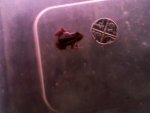
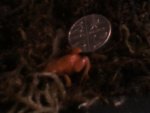
My golden mantella laid a few days ago so pulled a few clutches from their viv, found one clutch was just starting to hatch. This is my first attempt to raise them so fingers crossed.
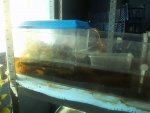
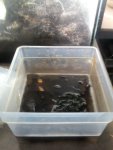
Tadpole rearing tank, have about twenty atm, another 80+ waiting to hatch. Very simple set up, soft water with oak leaves, heater set at 24c, thermometer. I have the hatching eggs in the floating tank, going to pull the tads out every couple of days. Also have a floating tub of E.tricolor tads in with them, I'm off next week so going to upgrade the tanks and get some Java moss.
The breeding and raising has gone better than expected, I had to sell thirty newly morphed froglets as my live food supply was insufficient. Im not certain about how many frogs I have , they are all hiding in various tanks and I can't check mortality rates. I have had a min of 100 spread out over three tanks with many more tadpoles.
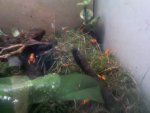
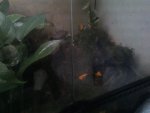
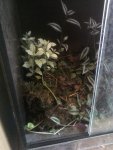
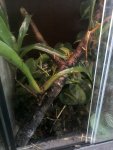
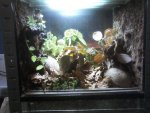
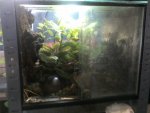
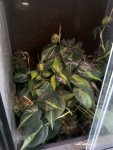
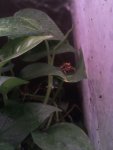
Laying has stopped for winter and my adults are going through their winter period, temp is down to 12c daytime with a small drop at night. Will be colder as winter draws in. Excellent year for these guys, have a few hundred frogs and more tads. Very low mortality rates, thanks to Chris Michaels from zls for his excellent advice which I followed to the letter. Couple of pics of the juvy vivs and a pair of E.tricolor breeding, they have also done very well this year, got a bunch of them and tads
Pics of my E.tricolor rearing, same as the mantella tbh.
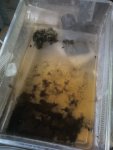
1) ,Eggs waiting to hatch, I pull them from the viv as the males hide the tadpoles when they are ready.I dip the eggs in water twice a day to prevent dehydration. Once the tads hatch they wiggle into the water.
2) Tadpole tub, oak leaves, bit of moss, feed pellets and a spirullina/chollela mix, they do fine on pellets but a bit off veggies can't hurt.
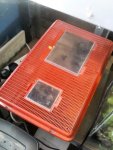
3) Once they get back legs they get transferred to a secure tub as they bail, the tubs on a slant with damp moss on the terrestrial section. Morphed frogs are collected from the moss
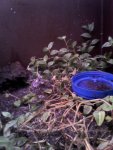
4) Once morphed they go in a viv
I kept this species years back and had to give them up as I just couldn't manage to supply them with enough food. They ate everything, nonstop and despite me culturing crickets and drosophila I couldn't keep up. I had two pairs so I have to say your achievements should not be understated in the slightest. Very well done.
Thanks. Livefood production is the most strenuous part of keeping them but it's only one hour per week so not a massive amount of work. Also I bully my friend Nathan into mashing the bannanas up for me as I am lazy
That's interesting. After years of fancy involved drosophila diets involving gelling agents, heating, yeast, incubation etc I now just use an over ripe mushy black banana for cultures. Most times there's no mould at all and it doesn't smell either. Do you have a special recipe? As for breeding crickets, I did that in the airing cupboard... never again. They were everywhere.
Fruitfly's are easy
1)Mashed bannanas
2)Add malt vinegar and activated yeast, brewer's yeast and sugar kept warm for a couple of hours, prevents mold.
3)Add this mixed to oats , at a thick porridge consistency.
4) Mix this together, you want a thick mix which doesn't break apart or run off a spoon, if it's too runny you can't shake fruitfly out of the container without it falling out.
It's that simple, will do a pic log of me making fruitfly's latter
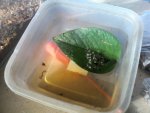
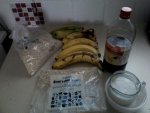
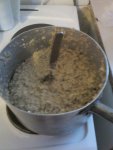
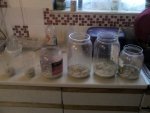
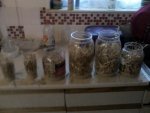
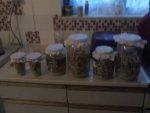
Basic ingredients for the fruit fly mix as above. Mixed together to form a solid mass, if it's too runny it will run out when the fruitflies are harvested.
Flies are harvested from earlier cultures, i dust them with calcium powder to kill any mites. Paper towel and elastic bands keep the flies in. These cultures will be ready to use in a couple of weeks, I do them weekly and those four big tubs will feed thirty adult dart frogs and mantella and around two hundred and fifty froglets, juvenile terrestrial newts and toads such as alpines, T.cristatus , B.variagata get them aswell.
This site uses cookies to help personalise content, tailor your experience and to keep you logged in if you register.
By continuing to use this site, you are consenting to our use of cookies.