
Thekid1877
New member
Hi everyone, first post. Looking for some expert advice on treating a “sick” axolotl. I’ll do my best not to ramble, but a little background. I have a axolotl that is approximately 9 months old, about 8” long. I never had any plans to keep a axolotl. I purchased a tank on Facebook marketplace place last June. There was a layer of sand in the bottom, with about an inch of water. Two days later, while cleaning it out, I noticed two small creatures moving around, about the size of rice. We were quickly thrust into the world of axoltols and read as much as we could. One didn’t make it past the first few weeks. The other one thrived and here I am today. A few days ago I noticed that our axolotls gill “feathers” appeared shriveled, slightly curved. She otherwise was acting and eating normally. I tested the parameters with a API kit multiple times. Ammonia and nitrites are 0, nitrates are near 0. The PH is around 8, tested with high PH solution bottle. I have a planted, 40g tank with eel grass, java fern, lidwigia and a few types of mosses. The substrate is dirt capped with fine sand. The tank was set up mid October of last year and was finished cycling by the end of November, which is when I moved the axolotl in. So she has been in the tank almost four months. I have been doing infrequent water changes, only two since she was moved in. Ive never had any spikes in any parameters. Temp is currently 61F, although it did get to the mid 50’sF during middle of winter. The tank in located in my basement. My filtration is a canister filter with spray bar. My last water changes was about three weeks ago. Around the same time I added a 6” air stone to the bottom for some more oxygen and enrichment. Also around this time she went on a 3 week run of not eating. This was around the end of February. She has since returned to normal eating schedule. Her diet consists of strictly earthworms, with the occasional carnivore pellet. I’m pretty tolerant of algae and other things growing in my tank, to a degree, as i think it gives it a more natural look and from what I read are generally harmless. Again, around the end of February i notice some black growth beginning on the piece of wood. This week it has exploded and is now covering my java fern and moss. From my research I believe it to be black water mold. Tank receives 6 hrs of light a day. I posted on Reddit a few days ago and got a little advice. Yesterday moved her to a quarantine tank, with dechlorinated water and a place to hide, water changes daily. She seems to being doing worse (not eating) in the quarantine tank but i guess its probably stress from the move and a new environment? Not sure if that was the right call? I’m doing a black out in the main tank, then will try to clean out as much of the algae and black mold as I can, then do a complete water change. Then check to make sure my cycle is still intact. Other than that I’m at a complete lose on where to proceed. Is there other water conditions i should be checking, if my other parameters are in acceptable range? Should i be dosing the tank with something? Should i be giving any sort of treatment to the axolotl while in quarantine? Could the water mold be causing a issue? Could the addition of the new air stone be a culprit? Should i have been doing more frequent water changes? I would greatly appreciate any tips, advice or insight anyone could provide. Thanks!
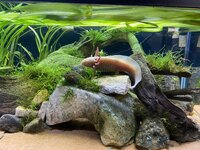
Shortly after introduction, December
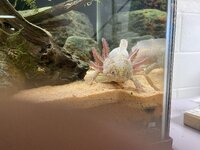
End of February


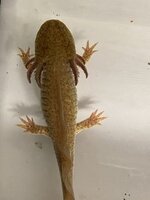
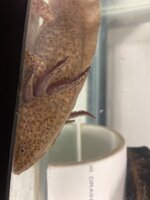
This week
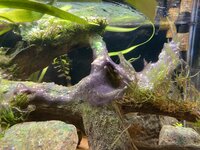

Black water mold
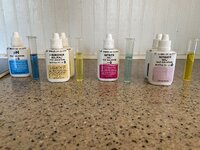
Test
Shortly after introduction, December
End of February
This week
Black water mold
Test
