Sorry for not getting back to you any sooner.
Its a shame Lottie didn't make it..
It does seem like your water quality may have been the issue.
Yes using dechlorinated water is best for hatching eggs.
As I said before the Ammonia shouldn't be too much of a problem in your main tank once your cycle is established. Only issue is when raising Axolotl larvae, and when quarantining since you want the water quality to be at its best. Perhaps another user with experience with their own tap water containing Ammonia at around 0.25ppm could give some advice.
I wouldn't use a dechlorinator that contains aloe vera, it creates a slim coat on most objects in your tank and it will eventually break down and add to your ammonia levels.
Use a dechlorinator like Prime, or Tetra.
Yes I believe the water changes during cycling aren't required until the Nitrate level is high around 40ppm.
You just need to make sure that you are providing an ammonia source to tanks that are cycling since once any ammonia is filtered by the bacteria into nitrites you will need to keep feeding your cycle ammonia.
Caudata Culture Articles - Cycling
Any ammonia that reaches 1.0ppm is not safe if you have an Axolotl living in it. You don't really want to see anything at 0.25 or higher if you are keeping Axolotls in tubs/containers.
It seems Harleys tank has something causing the PH to rise, considering it is not that high when you test your tap water. I don't think 8.2 is quite too high as I have seen other users whos Axolotls are healthy in a PH of 8.2.
It looks like Harleys tank is in the middle of cycling, ammonia is present, nitrite is present, your now waiting for the nitrite to slowly go down and the nitrate to rise.
My tap water also contains Nitrates close to 40ppm, its not ideal since levels of Nitrates within my tank will rise a lot faster since I'm basically adding Nitrate every time I do water changes to my cycled tank. You just have to perform water changes to stop the Nitrates from going even higher. I'm in the middle of adding live plants to help absorb some of the Nitrate.
I use Prime as a dechlorinator now as I've been reading how it binds Nitrate for upto 48 hours, apparently this makes it easier for plants to absorb the Nitrate.
The cycling process can take from 3-6 weeks. For your tank to be cycled, a beneficial bacteria needs to be present to break down the Ammonia and Nitrites into Nitrates. Ammonia and Nitrites are lethal to Axolotl and are produced from your Axolotls waste and decomposing food. Nitrates are a slightly less toxic by product. During cycling the beneficial bacteria will colonize your tanks surfaces such as substrate, ornaments, filter, and begin to feed on the Ammonia turning it into Nitrites, then bacteria will break down the Nitrites into Nitrates. The bacteria is known as a 'biofilter', as it filters the ammonia and nitrites into less harmful nitrates.
Once this cycle is established by the beneficial bacteria colonizing the tank, the Ammonia, and Nitrites will always be filtered by the bacteria into Nitrates, all you have to do is monitor you cycle by testing your water weekly so that when your Nitrates build up to around 40ppm you can perform a 30% water change to lower the Nitrates.

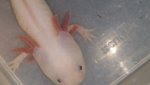
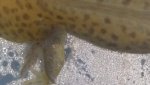
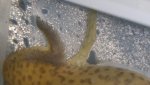

 but I could be wrong. I want to ask you what you do personally I can get them down the vets or I could try the de chlorinated bottled water like you said but don't think I'll be able to do either till Monday as that is when i get paid. I also bought eggs a few days before I noticed anything. Do I use de chlorinated bottled water for their water changes and which one would you recommend. sorry for all the questions.