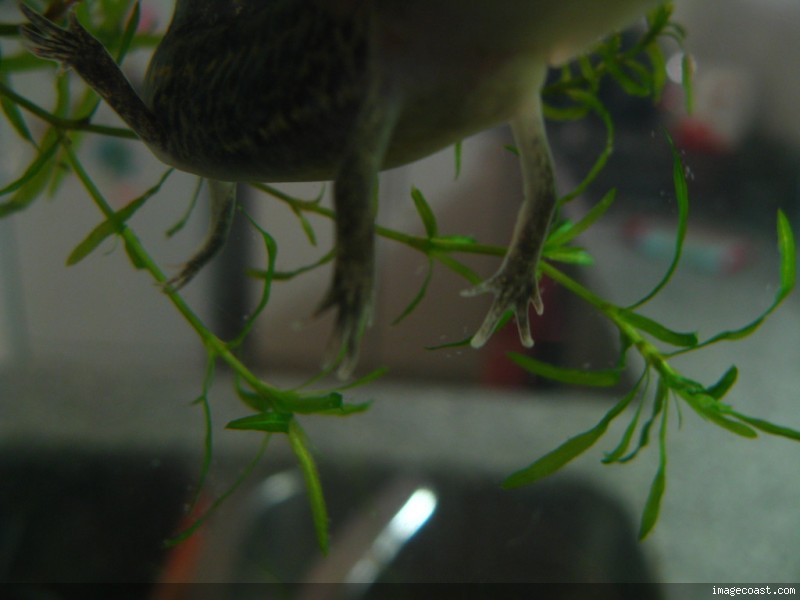
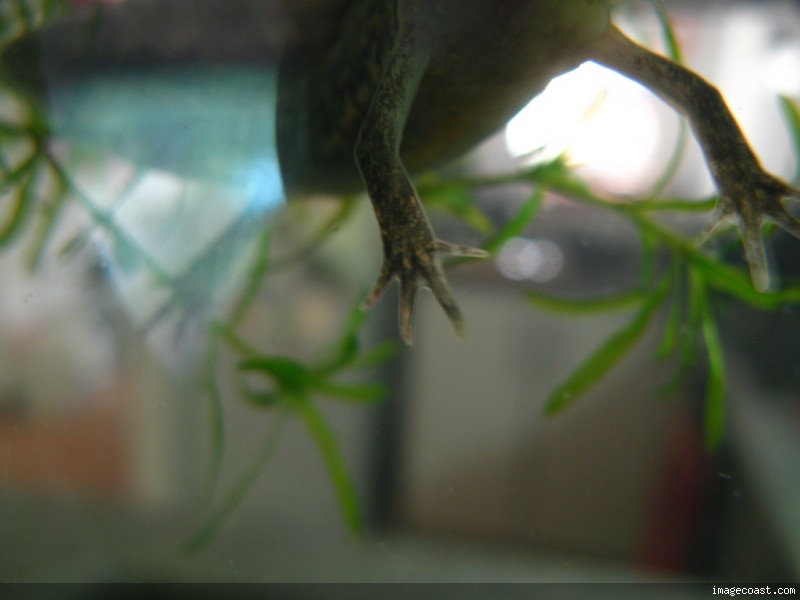
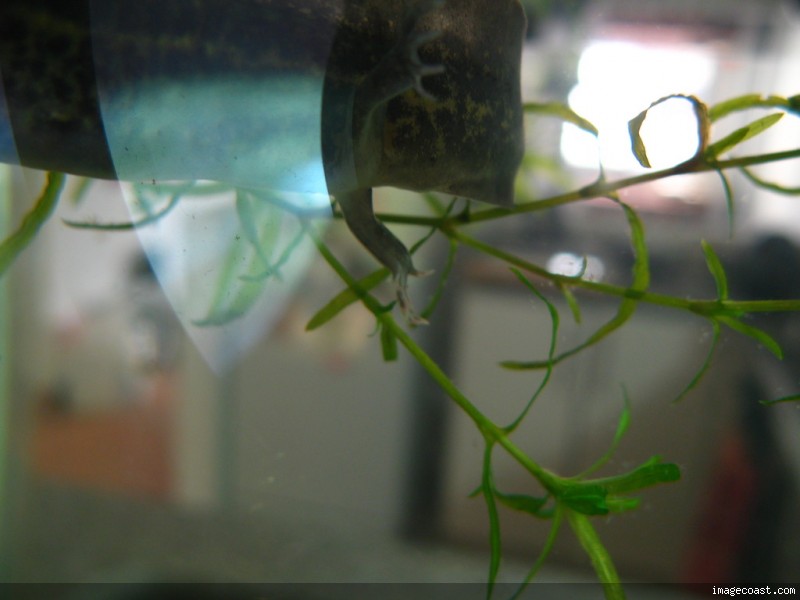
Illness/Sickness: Reddish toes again, problems with water?

daremo

New member
Joined
Dec 22, 2009
Messages
497
Reaction score
4
Points
0
Country
Argentina
Hi guys!

I used to have this problem with my older axie, she used to get his fingers all reddish, like something was eating them, then get fungus...

It was fixed when I added almond leaves to her tank, I tested the water and everything was fine except that was very soft...

the problem resolved with the leaves but now I have a little axie that is having the same problem!!
I cannot clearly see if he's having fungus but surely his toe tips are looking red ... can I make salt baths to a 9 cm axie?? is it the same procedure?

I have requested the water tests of the building's water tank to see if I can make any sense of what is going on... my guess is that there is something not right with the water :'(

any help is appreciated!
 
Since the almond leaves solved the problem for your older axie, why not do the same for the little one? Especially if you don't see any fungus...

Should a fungus form then yes, it is the same procedure. Hope you find out what's in your water.
 
oh I forgot to mention the tank the little axie is in, already has an almond leaf ...

I added it before getting the axie and the water has tannins (it looks yellowish)
but it seems its not working, or maybe it needs more time ...

As soon as I have the water report I'll post it

thanks!
 
If I remember correctly, almond leaves can make the water soft.
 
I don't know what to try... for my older axie the almond leaves worked but now I am having the same issue even with the leaves in the water... maybe it takes a while to have an effect...

is there other way to harden the water without risking the axie?
 
I once heard that those holiday fish feeder blocks (the white hard ones) harden water as they dissolve..?
 
... or how about dissolving a few tea spoons of rock salt into the water?
 
would sea salt work aswell?
 
One of the ways i harden my water is by adding a few pieces of coral to my tank. It may take a while, but it will work.
 
One of the ways i harden my water is by adding a few pieces of coral to my tank. It may take a while, but it will work.

This may be acceptable for fish applications but not for axolotls as the coral can leech out calcium which can cause other issues.

Sea salt or Aquarium salt can help harden the water - the salt needs to be iodine free. 1T per 10 gallons is what was recommended to me by a breeder.
 
Yea, i used that method for fish.heh, soorry :angel:
 
thanks for the advice!!

I cannot see if there is fungus, but the tip of some fingers are reddish and some are white...

I guess I should add a teaspoon to the water I have for replacing and not into the tank right? can I make things worse doing that?
 
hola daremo, mira, basicamente lo que le pasa a tu albino es que se raspa con los objetos del acuario y luego se infecta con hongos. como dijeron arriba consegui sal libre d eyodo, preferentemente sal marina que se usa para acuarios, y las hojas de almendro son muy buenas también ( segun oí, yo siempre uso la sal ) en axolotes recomiendo un lugar libre de decoracion que pueda dañarlo, los mios estan sol ocon plantas acuaticas y piedras canto rodado que las agarran.- De esta manera sigue siendo estetico, facil de limpiar y más seguro. saludos.


Sorry to reply in spanish, it was faster than writting in english haha
 
hola fer, gracias

te comento que no es ese el problema.. ya me pasó con mi otro axo y no es nada en la pecera que lo dañe... el problema está en el agua o en algo del acuario donde lo compré (el propio animal o las plantas , que ya las saqué)

no tengo fotos de ésta pecera pero lo único que tiene son grandes piedras redondas, plantas y una maceta para esconderse... tengo fotos de la otra pecera donde podés ver que tampoco tiene nada que lo lastime y sin embargo tenía el mismo problema, que se solucionó con las hojas de almendro.

tengo sal marina, pero no quiero hacer lío con el agua...
 
no, o sea, el agua salina es un tratamiento a aparte, no dentor del acuario, serian baños de sal de 20-20 min., hasta que veaas que mejore ;)
 
I don't think you can over estimate the value of having properly formulated water. Almost every issue I've faced has been made better by addressing water quality. Your previous successful use of Almond leaves hints at this as being consistent with this observation. This is from the Ambystoma Genetic Stock Center website. Read this and give it a try.


"Water
"Water is the most important component of the axolotls' environment. Never house them in extremely soft or distilled water. They need hard water to help them maintain the integrity of their skin, their most important defense against infection. Remove any chlorine, chloramines, or ammonia that may have been added as part of municipal water treatment. Commercial preparations (e.g., Amquel ) are available for this purpose. We pass our water through an exchange resin to remove heavy metals and past a sterilizing UV light as well. We also add salts to the water to make a modified Holtfreter’s solution."


"The recipe we use to make 40% Holtfreter's in a 44 gallon barrel is:
KCl: 1 teaspoon


CaCl2: 2.5 teaspoons


MgSO4.7H2O: 2 tablespoons


NaCl: 240 ml (dry but measured in a liquid beaker"


"The salts restore hardness after water treatment and help us maintain the animals' health by discouraging parasites and fungus. Extra salts are not essential, however, if you are attentive to good husbandry practices and the water is hard and free of chemicals and heavy metals. Keep the pH between about 6.5 and 8. If pH is at the high end of this range, monitor ammonia carefully because its toxicity will be greater than at neutral pH."
 
hola daremo, mira, basicamente lo que le pasa a tu albino es que se raspa con los objetos del acuario y luego se infecta con hongos. como dijeron arriba consegui sal libre d eyodo, preferentemente sal marina que se usa para acuarios, y las hojas de almendro son muy buenas también ( segun oí, yo siempre uso la sal ) en axolotes recomiendo un lugar libre de decoracion que pueda dañarlo, los mios estan sol ocon plantas acuaticas y piedras canto rodado que las agarran.- De esta manera sigue siendo estetico, facil de limpiar y más seguro. saludos.

Sorry to reply in spanish, it was faster than writting in english haha

hola fer, gracias

te comento que no es ese el problema.. ya me pasó con mi otro axo y no es nada en la pecera que lo dañe... el problema está en el agua o en algo del acuario donde lo compré (el propio animal o las plantas , que ya las saqué)

no tengo fotos de ésta pecera pero lo único que tiene son grandes piedras redondas, plantas y una maceta para esconderse... tengo fotos de la otra pecera donde podés ver que tampoco tiene nada que lo lastime y sin embargo tenía el mismo problema, que se solucionó con las hojas de almendro.

tengo sal marina, pero no quiero hacer lío con el agua...

no, o sea, el agua salina es un tratamiento a aparte, no dentor del acuario, serian baños de sal de 20-20 min., hasta que veaas que mejore ;)

Sadly, we don't all understand Spanish. :eek: Could you please translate the above posts into English, so that all members of the forum may benefit and contribute to the discussion?

Many thanks.
 
Last edited:
sorry about it

I didn't translate because it's about a suggestion that the axie may be hurting with something in the tank, which is not the case.

By the way he's fingers are not reddish now but somewhat more white...
Is it probable that making more water changes can affect him?
I added a whole almond leaf to the tank (it's a 50x40x20 tank but the axie is 9 cm)
He's swimming, eating, acting totally normal...

I'll keep you updated and as soon as I have the water report I'll let you know!
 
I don't think you can over estimate the value of having properly formulated water. Almost every issue I've faced has been made better by addressing water quality. Your previous successful use of Almond leaves hints at this as being consistent with this observation. This is from the Ambystoma Genetic Stock Center website. Read this and give it a try.


"Water
"Water is the most important component of the axolotls' environment. Never house them in extremely soft or distilled water. They need hard water to help them maintain the integrity of their skin, their most important defense against infection. Remove any chlorine, chloramines, or ammonia that may have been added as part of municipal water treatment. Commercial preparations (e.g., Amquel ) are available for this purpose. We pass our water through an exchange resin to remove heavy metals and past a sterilizing UV light as well. We also add salts to the water to make a modified Holtfreter’s solution."


"The recipe we use to make 40% Holtfreter's in a 44 gallon barrel is:
KCl: 1 teaspoon


CaCl2: 2.5 teaspoons


MgSO4.7H2O: 2 tablespoons


NaCl: 240 ml (dry but measured in a liquid beaker"


"The salts restore hardness after water treatment and help us maintain the animals' health by discouraging parasites and fungus. Extra salts are not essential, however, if you are attentive to good husbandry practices and the water is hard and free of chemicals and heavy metals. Keep the pH between about 6.5 and 8. If pH is at the high end of this range, monitor ammonia carefully because its toxicity will be greater than at neutral pH."

thanks so much for this!

I really don't want to mess with chemistry... I will try with the almond leaf giving that it worked with the other tank and in the meantime I will get water from my mom's house

I will try and get a plumber to test my water too and if the problem persists I can always ask a chemist friend to make that salt mix for me...
 
I took some pictures today, they don't look very reddish but they don't look dark either...

mg0054.jpg

mg0056.jpg

mg0057.jpg
 
General chit-chat
Help Users
  • No one is chatting at the moment.
    There are no messages in the chat. Be the first one to say Hi!
    Back
    Top