Sick After Tank Change

_creepy_b

New member
Joined
Dec 20, 2022
Messages
5
Reaction score
0
Points
1
Location
Brooklyn
Country
United States
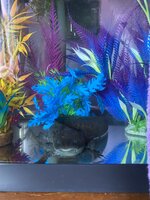
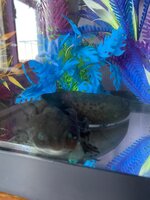
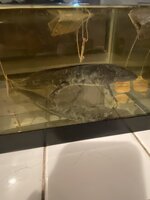
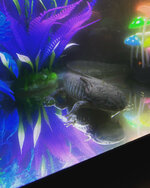
This is my beautiful boy Nestor. I really need help. I bought Nestor in September and he was living in a ten gallon tank and doing amazing with daily water changes and use of Prime. He was eating and growing. I moved him two weeks ago into a 20 gallon that I had cycled for about six weeks, by ghost feeding and using water from my established and healthy fish tanks. The ammonia remains at 0ppm, nitrate and nirites are also nonexistent - I bought him a chiller that was running as the tabk cycled, a HOB and a sponge filter - I thought all was well until last Sunday when i saw a white spec on him - the pictures where he looks happy are from last Saturday- I am devestated by what has happened to him since and have removed him anf returned him to his ten gallon - as you can see in the later picture be is doing terribly. Monday when I got home from work he was floating. He defecated twice - which he has never doen back to back. and stopped floating. I read up on adding salt to the water and tea baths. I did a 25% water change added Prime and two tablespoons of salt to the tank - not heaping - just barely two - to the twenty gallon tank and I also gave him a tea bath - he started to look alot better. Then I did a tea bath the next morning and he was looking better. I work in the emergency room and I admit last night I was very very tired and I fell asleep and did not soak him. I woke up in the middle of the night and he was floating again. I immeadiately gave him another tea bath - I put a few grains of salt in as well. Maybw this hurt him? He didn't stop flowting all day. He also tried to escape the tank when I put him back in which I have never seen him do. He was looking up at the space between the chiller hose and the filter. I had to block the are and he stopped and did not return there but was hanging/ floating for a few hours and hai skin started to look worse with pale patches and I decided to put him back into hia nursery tank and he is in there now with tea and he is finally not floating. He is not eating when he used to ear voraciously. I feed him frozen blood worms- Hikari and Hikari frozen Brine Shrimp and I feed him carefully and try not to overfeed him which is why I don't know how he was so constipated when he was moved. I cannot find an exotic vet and my schedule right now is insane with work and I really need help. I think will improve in hos baby tank but I am scared now yo ever move him again - I don't knwo what I did wrong. I will say that the pH is on the low side when I used the strips - could there be a crash I am not detecting? Wouldn't the ammonia read as higher - I am sorry I am confused as to what is happening - I have four fish tanks and all my fish are doing amazing and - of course- I love this little guy so much and this happens - he is very sweet and begs for food and I am very sad now that he is sick and not eating and I feel I somehow hurt him by trying to move him into hsi new accomodations
 

Attachments

  • 3EA0C8DA-6994-4C39-8E26-E5C80C043F46.jpeg
    3EA0C8DA-6994-4C39-8E26-E5C80C043F46.jpeg
    2 MB · Views: 768
  • F0C00B70-C7F3-4326-ACE6-62142BB22170.jpeg
    F0C00B70-C7F3-4326-ACE6-62142BB22170.jpeg
    1.6 MB · Views: 189
  • 48A61889-9B07-4542-BC4F-44D8B40D668E.jpeg
    48A61889-9B07-4542-BC4F-44D8B40D668E.jpeg
    1.5 MB · Views: 187
  • E48EB414-6750-4313-8056-8ECA5BF36467.jpeg
    E48EB414-6750-4313-8056-8ECA5BF36467.jpeg
    710.2 KB · Views: 197
I would recommend calming down first and foremost. Is the problem only the white patch??? Is there any fuzziness related to this white patch??? If water parameters are ruled out, then this could very likely be just a color change. Others have observed their darker colored axolotls also undergoing color changes pending on the brightness of the tank and what-not. It's pretty common and almost always nothing to worry about. This could more than likely be a minor ph issue as you've stated too. It is not recommended to combine treatments of salt and tea baths and should not be done longer than 10 minutes.
 
I would recommend calming down first and foremost. Is the problem only the white patch??? Is there any fuzziness related to this white patch??? If water parameters are ruled out, then this could very likely be just a color change. Others have observed their darker colored axolotls also undergoing color changes pending on the brightness of the tank and what-not. It's pretty common and almost always nothing to worry about. This could more than likely be a minor ph issue as you've stated too. It is not recommended to combine treatments of salt and tea baths and should not be done longer than 10 minutes.
I think the photo is not showing the damage- he has lost weight - is not eating - floated almost all day - aside from this its as if he has lighter grey patches that are irregular in texture - they are grey almost white and look almost like they ate flaking off in areas - he is nornally plae blueish grey and grey -he is lethargic and weak -there was white over his eyes at one point - I also forgot to mention that I noted that the flow from the chiller was very powerful and I put a baffle on it - Thank you re: the salt and tea not being combined - that happened because I used tea alone the first night and saw good results and I honestly thought I had also used salt - but I must not have - at present he is in conditioned water in his old tank and he has at least stopped floating - his skin looks bad though / better than earlier - he is also holding his tail straight again
 
you need to test the water with a liquid fresh water test.
what do you mean by ghost cycled? the nitrates shouldn't have been non existent, it sounds like he went from a cycled tank to a tank that looked cycled but wasn't.
once you have a liquid test please post results.
the amount of salt used in the water is under 2g per litre in the 10 gallon and would be fine using three tablespoons, using a small amount of salt with tea isn't harmful which is why holtfreters solution can be used in conjunction with tea baths, please look into using holtfreters solution info here.. Axolotls - Requirements & Water Conditions in Captivity
 
you need to test the water with a liquid fresh water test.
what do you mean by ghost cycled? the nitrates shouldn't have been non existent, it sounds like he went from a cycled tank to a tank that looked cycled but wasn't.
once you have a liquid test please post results.
the amount of salt used in the water is under 2g per litre in the 10 gallon and would be fine using three tablespoons, using a small amount of salt with tea isn't harmful which is why holtfreters solution can be used in conjunction with tea baths, please look into using holtfreters solution info here.. Axolotls - Requirements & Water Conditions in Captivity
I relly apprecaite this- he went from a tank that had no filtration - I was doing daily water changes with Prime being added to a tank that was cycled - when I got him this was how the person who bred him had been taking care of him - but I wanted hm and knew he needed a bettwr set up - so I got the 20 gallon - I actually bought him a 40 gallon long but when it was delivered it eas 40 breedee and couldn't for where I was going to place it and in the other location I can't accomodate the chiller - I was ghost feeding the tank I meant to say - I also added a piece of driftwood from one of my established tanks - which I removed and some of the water from my established tanks to start off the cycle -I am using the API liquid two part test for ammonia by and the stick test for the other parameters - I just checked on him - his skin still looks dark and patchy but he is now conpletely not floating - he is back in the ten gallon tank I raised him in - I'm going to give him a bath with tea and change out that water - I will obtain the full liquid test kit and post results on the larger set up - I appreciate this - I should have also added that the larger set up has alot of water flow and maybe this stressed him to the point he became ill - he definitively had cottony growths on him - while small they were there - not on his gills but on various points of his body- I don't know if he perhaps gor columnaris? I have put a baffle to slow the flow - should I break down ans recycle the tank again - I am scared the tank has some type of fungus or columnaris - perhaps from the driftwood I used to cycle - the driftwood
came from a tank from one of my bettas who passed - however my betta was very healthy and passed sadly getting stuck in the filter baffle ( I have changed how I placw them now) -
 
driftwood and old tank water won't cycle the tank unless the driftwood is decaying and producing ammonia and the old tank water contained high amounts of ammonia in which case the fish in the tank that the driftwood/water came from would have died by now, to cycle the tank ammonia needs to be introduced so that bacteria is formed which will break down the ammonia and nitrites. whilst he is in an uncycled tank/tub the water needs to be replaced daily so that the ammonia levels don't reach toxic levels.
on pipe inlets it is best to use either a sponge or a shrimp guard to prevent injuries (this applies to axolotls as well as fish) on the outlet there are numerous ways to reduce flow pressure ranging from baffles to spray bars and even drip trays.
to cycled the tank add everything needed in to the tank ie.. filters, air-stone, ornaments etc.., for cycling using a heater will help speed up the process as will bottled bacteria, add ammonia (most people use dr tims) to the tank until the level is 4ppm, leave for a week then test and top back up to 4ppm, retest after 24hrs then top back up to 4ppm, repeat this process until both ammonia and nitrites are zero after 24hrs then top back up to 4ppm for two more days to be sure that the cycling is done, do not do a water change unless either the cycling is done or the nitrates are 110ppm or over, keep an eye on the ph, if it gets to 7 or lower added enough bicarbonate of soda to bring up to 7.4 - 7.6, make sure that there is enough bio-media to house bacteria, remove any activated carbon whilst cycling as it's not required, if you do have to do a water change don't change more than 50% and make sure the water is dechlorinated before hand.
whilst he is in the tank/tub change water daily, dechlorinate water before adding, add 4.5 level tablespoons (2g per litre) salt per ten gallons water (make sure salt is dissolved in before hand), use black tea bath or methyline blue bath, almond leaves can be added to the tank/tub, make sure to rinse them of daily and dispose of them if they are decaying.
make sure that there is an air-stone installed in both tanks.
also if possible find out what your kh gh is.
 
driftwood and old tank water won't cycle the tank unless the driftwood is decaying and producing ammonia and the old tank water contained high amounts of ammonia in which case the fish in the tank that the driftwood/water came from would have died by now, to cycle the tank ammonia needs to be introduced so that bacteria is formed which will break down the ammonia and nitrites. whilst he is in an uncycled tank/tub the water needs to be replaced daily so that the ammonia levels don't reach toxic levels.
on pipe inlets it is best to use either a sponge or a shrimp guard to prevent injuries (this applies to axolotls as well as fish) on the outlet there are numerous ways to reduce flow pressure ranging from baffles to spray bars and even drip trays.
to cycled the tank add everything needed in to the tank ie.. filters, air-stone, ornaments etc.., for cycling using a heater will help speed up the process as will bottled bacteria, add ammonia (most people use dr tims) to the tank until the level is 4ppm, leave for a week then test and top back up to 4ppm, retest after 24hrs then top back up to 4ppm, repeat this process until both ammonia and nitrites are zero after 24hrs then top back up to 4ppm for two more days to be sure that the cycling is done, do not do a water change unless either the cycling is done or the nitrates are 110ppm or over, keep an eye on the ph, if it gets to 7 or lower added enough bicarbonate of soda to bring up to 7.4 - 7.6, make sure that there is enough bio-media to house bacteria, remove any activated carbon whilst cycling as it's not required, if you do have to do a water change don't change more than 50% and make sure the water is dechlorinated before hand.
whilst he is in the tank/tub change water daily, dechlorinate water before adding, add 4.5 level tablespoons (2g per litre) salt per ten gallons water (make sure salt is dissolved in before hand), use black tea bath or methyline blue bath, almond leaves can be added to the tank/tub, make sure to rinse them of daily and dispose of them if they are decaying.
make sure that there is an air-stone installed in both tanks.
also if possible find out what your kh gh is.
Water is always dec
driftwood and old tank water won't cycle the tank unless the driftwood is decaying and producing ammonia and the old tank water contained high amounts of ammonia in which case the fish in the tank that the driftwood/water came from would have died by now, to cycle the tank ammonia needs to be introduced so that bacteria is formed which will break down the ammonia and nitrites. whilst he is in an uncycled tank/tub the water needs to be replaced daily so that the ammonia levels don't reach toxic levels.
on pipe inlets it is best to use either a sponge or a shrimp guard to prevent injuries (this applies to axolotls as well as fish) on the outlet there are numerous ways to reduce flow pressure ranging from baffles to spray bars and even drip trays.
to cycled the tank add everything needed in to the tank ie.. filters, air-stone, ornaments etc.., for cycling using a heater will help speed up the process as will bottled bacteria, add ammonia (most people use dr tims) to the tank until the level is 4ppm, leave for a week then test and top back up to 4ppm, retest after 24hrs then top back up to 4ppm, repeat this process until both ammonia and nitrites are zero after 24hrs then top back up to 4ppm for two more days to be sure that the cycling is done, do not do a water change unless either the cycling is done or the nitrates are 110ppm or over, keep an eye on the ph, if it gets to 7 or lower added enough bicarbonate of soda to bring up to 7.4 - 7.6, make sure that there is enough bio-media to house bacteria, remove any activated carbon whilst cycling as it's not required, if you do have to do a water change don't change more than 50% and make sure the water is dechlorinated before hand.
whilst he is in the tank/tub change water daily, dechlorinate water before adding, add 4.5 level tablespoons (2g per litre) salt per ten gallons water (make sure salt is dissolved in before hand), use black tea bath or methyline blue bath, almond leaves can be added to the tank/tub, make sure to rinse them of daily and dispose of them if they are decaying.
make sure that there is an air-stone installed in both tanks.
also if possible find out what your kh gh is.
The use of the driftwood was to introduce benefical bacteria from the established tank. People often do this with fish - using media .. I have done it - the tank was cycled. I had zero ammonia / nitrate / nitrite - then a spike and then a drop - so the tank was cycled. When I raised him - in the tank is he is presently being "tubbed" in the water was changed religiouslt every day- Prime was added each time and this is the case now. I also use a turkey baster before all changes / during and when I was feeding him to get rid of all debris -I mentioned addingthe baffle to the inlet pipe - I have added a sponge to it. I did not feel flow and I was afraid that the impeller of the chiller might strain so I made a slice into it- now I feel its still too strong. I am planning to get a glass jar - route the inlet into it so that the water needs to flow down into the jar and then out and hopefully this will slow it more but at the same time not burn out the impeller on the chiller's motor - I will try to use a narrow necked jar.
I trult appreciate your notations on the cycle- I have some liquid ammonia here - I am going to start the cycle process again ...
that said it looked like he was slouging off his slime coat - his skin was grey and raggea and lethargic today... I started to feel that this is perhaps columnaris - he eas just moved - the tank is oxygen rich and the patches began across his back much like when it presents in fish - saddle bsck disease - I did soak him in tea this AM but it did nothing for him .. in contrast I just did a salt bath and much of the ragged skin came off - I changed the water and added Prime and pur him back in and he immediately looked more animated -
I am starting to think this is columnaris - I know its uncommon in cold water tanks but this is presenting as such - I belive my stupid error of placing him in a high water flow environment stressed him massively and lowered his immune system... I am going to keep treating him with twice daily salt baths ans then tier down to one in four days and keep with daily water changes ... my question now is - as columnaris exists in all freshwater set ups what are my steps to reintroduce after the larger set up is cycled - how to I reduce the colony - I heard water changes are needed but as durinf cycling I also do not change water I am thinking my next move should be water change in the larger set up as much as I can to reduce the colony and then start from almost scratch to cycle with yoir instructions in mind and then make sure the water flow is vastly lowered and test - test - test
 
although introducing driftwood etc.. to a tank to will add some bacteria but to start a cycle the bacteria required to cope with the amount of waste produced still needs time to grow and also needs a food source.
unless you have a heavily planted tank or other means of removing nitrates then zero nitrates means that the tank is uncycled.
columnaris in axolotls starts on the gills first, the reason for the skin slough is due to ammonia burns which is also why he tried to get out of the tank and was also floating.
because the motor in a chiller/filter etc.. are brushless they don't get damaged by flow restrictions, it is only when there is no flow at all or no water around the unit that damage can occur because the unit uses the water for cooling. also most chiller unit require a pre-filter so as not to get clogged with debris/waste etc..
holtfreters used at 50% can be used as a preventative against fungal infection and the salt and chlorides used also act as a protective against ammonia and nitrite spikes.
 
Last edited:
although introducing driftwood etc.. to a tank to will add some bacteria but to start a cycle the bacteria required to cope with the amount of waste produced still needs time to grow and also needs a food source.
unless you have a heavily planted tank or other means of removing nitrates then zero nitrates means that the tank is uncycled.
columnaris in axolotls starts on the gills first, the reason for the skin slough is due to ammonia burns which is also why he tried to get out of the tank and was also floating.
because the motor in a chiller/filter etc.. are brushless they don't get damaged by flow restrictions, it is only when there is no flow at all or no water around the unit that damage can occur because the unit uses the water for cooling. also most chiller unit require a pre-filter so as not to get clogged with debris/waste etc..
holtfreters used at 50% can be used as a preventative against fungal infection and the salt and chlorides used also act as a protective against ammonia and nitrite spikes.
Hi he's inproved tremendously - I have him in a ten gallon without filtration - I change the watwe daily and use Prime with all changes - the water is very cold due to the current season and condtions in my apartment - he began eating again late last week - I am feeding him very lightly ss he had not been eating for some time - frozrn items - all of the akin sloughing and grey patches are gone - the only thing that is new is a small nodule on his flank/ side - it at first appeared to look like a small wound and now its thr color of his skin - blue/ grey - he also lost part of his tail - on the tip ( the top portion) maybe a few centimeters- this sloughed off - it is healed well and I think may be regenerating - hard to tell - I had treated him with about a teaspoon of salt in 2.5 litres of water twice a day - when i saw this wound appear I started adding two black tea bags - the wound has been turning the color of his flesh now - I now soak him only once a day -

My next concern is how to get him back i to the tank

I should also clarify- the reason I felt the tank was cycled was the drift wood was from an established tank
I also had added water from his ten gallon that he had soiled
i also was adding fish food to this tank (ghost feeding) to encourage bacteria growth
i had some floating plants from an established tank and I waited a long time
i think about six weeks

initially there was a ammonia / nitrate and nitrite spike
he was not in the tank during any of this
after these spikes I saw the levels drop down again - the ammonia / nitrate and nitrate were at zero and I added him in

Also I read its fungus that begins on the gills and columnaris presents on the body .. I don't know - I suppose as both fungal and columanris / bacterial present similarily along with a host of other illnesses it will be difficult for me tk know what went wrong ...

I am afraid to put him back into this set uo but i have to eventually - its a larger enclosure and when summer comes he will need the chiller ..

i read that columnaris lives for 35 days without a host .. ita all very confusing as I know all fish have columanris and that its an opprtunistic illness - and I do give creedence to what you are saying about the cycle - especially because he was trying to leave ...

so the tank is still running ..
do I need to disinfect it or .. do I just try to assure its cycled

some small areas of green algae have developed which to me is a good indicator of a tank becoming cycled
i will test the water but - in agreement with what you had said - maybe i added him in prematurely but as i had said - it appeared cycled

i never had this trouble with my fish so I am very confused as to next steps
 
because you have fish you should be aware of the issues associated with over stocking the aquarium, when you have a axolotl it is similar to over stocking which is why it is so important to have the aquarium properly cycled, 1. is to make sure no harmful nitrogen compounds are present, 2. to make sure that the filtration can cope with a large amount of waste.
to cycle a fish tank the amount of ammonia required is about 1-2ppm and fish can be added gradually to increase the bacteria colony, with an axolotl the tank is cycled at 4ppm as this is the potential amount of waste an axolotl can produce per day.
the other reason I said the tank isn't cycled is because your nitrate levels were zero, even if your axolotl was only producing 1ppm per day that equals 3.6ppm nitrates per day which would be 25ppm after a week.
fungal issues are a problem that plagues axolotl owners and can be prevented by making sure the water salt/mineral levels are good, this is also why I always recommend that holtfreters is used in any water that an axolotl inhabits.
 
General chit-chat
Help Users
  • No one is chatting at the moment.
    RyanLHawk: Spotted +1
    Back
    Top