midnight17101
New member
Hello all,
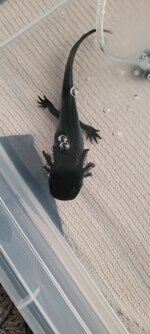
First time post here. I have a juvenile axolotl that is about 8 inches long. During a fecal flotation coccidia and "heavy hookworm-like parasites" were found. He went through a 7 day course of trimethoprim which was injected into earthworm pieces (cut to size) and is due to start a round of Panacur (also injected into earthworm pieces). He had a suppressed appetite while taking the trimethoprim and was having loose stools during the course of that medication. He had always had very well formed stools for the 3 months that we had him and his first loose/stringy stool came the day before the medication started. He has been tubbed for about 3 weeks now and I have an identical tub (24"x18") that he is moved between once or twice daily so he can stay in fresh water as much as possible during the tubbing. His last poop was the night before his last dose of trimethoprim. Since stopping the medication and also switching from large Petsmart earthworms to the smaller earthworms from The Mottled Lotl, his appetite has roared back, but he hasn't pooped in over 12 days now. The vet said that we may need to do an x-ray to check for any blockages, but they haven't had me bring him in yet since his appetite is so good and they think he'll likely poop soon. He rests for most of the day each day but constantly swims laps/paces in the tub at night. He always lived in his 40 gallon breeder tank in my daughter's room until he was tubbed in my room so I never got a chance to see his night time activity until he was tubbed. He takes the smaller night crawlers more aggressively than he ever did the larger ones that he used to eat and looks up at me whenever I come near his tub during the day and snaps at the surface as if to say he is hungry. I am just afraid to over feed him since he isn't pooping recently so he usually gets 1 or 2 of the small night crawlers per day but he would gladly eat more. Has anyone had a juvenile axolotl with such a good appetite that hasn't pooped for this long? Just wanting to get some opinions from experienced axolotl owners as to what the problem may be. The vet says that impaction or blockage just doesn't align with having such a good appetite and being able to comfortably rest all day . Sometimes I think his swimming at night looks a little frantic and he likes to stick his nose out of the water in the corners and take gulps of air every so often between laps. He used to do that during the trimethoprim treatment before he would poop and sometimes would float a little (completely level, not tail up) but then sink back down shortly after. He also sticks his nose out of the water or at least near the surface and snaps at bubbles from the air stone when we approach the tub as if to greet us or be ready for that next meal. The vet is inclined to hold off on the Panacur treatment until he poops. I need to get him cleared of these parasites so he can return to his tank that was just replaced along with the filter, chiller and everything that was in it due to the parasites. It is almost cycled again, but he likely has another month in the tubs once he starts the next treatment since it will be 5 days of medication, a break for a week, another 5 days of medication and then a follow-up fecal exam after that. Any opinions on my ramblings are greatly appreciated! His name is "Midnight".
First time post here. I have a juvenile axolotl that is about 8 inches long. During a fecal flotation coccidia and "heavy hookworm-like parasites" were found. He went through a 7 day course of trimethoprim which was injected into earthworm pieces (cut to size) and is due to start a round of Panacur (also injected into earthworm pieces). He had a suppressed appetite while taking the trimethoprim and was having loose stools during the course of that medication. He had always had very well formed stools for the 3 months that we had him and his first loose/stringy stool came the day before the medication started. He has been tubbed for about 3 weeks now and I have an identical tub (24"x18") that he is moved between once or twice daily so he can stay in fresh water as much as possible during the tubbing. His last poop was the night before his last dose of trimethoprim. Since stopping the medication and also switching from large Petsmart earthworms to the smaller earthworms from The Mottled Lotl, his appetite has roared back, but he hasn't pooped in over 12 days now. The vet said that we may need to do an x-ray to check for any blockages, but they haven't had me bring him in yet since his appetite is so good and they think he'll likely poop soon. He rests for most of the day each day but constantly swims laps/paces in the tub at night. He always lived in his 40 gallon breeder tank in my daughter's room until he was tubbed in my room so I never got a chance to see his night time activity until he was tubbed. He takes the smaller night crawlers more aggressively than he ever did the larger ones that he used to eat and looks up at me whenever I come near his tub during the day and snaps at the surface as if to say he is hungry. I am just afraid to over feed him since he isn't pooping recently so he usually gets 1 or 2 of the small night crawlers per day but he would gladly eat more. Has anyone had a juvenile axolotl with such a good appetite that hasn't pooped for this long? Just wanting to get some opinions from experienced axolotl owners as to what the problem may be. The vet says that impaction or blockage just doesn't align with having such a good appetite and being able to comfortably rest all day . Sometimes I think his swimming at night looks a little frantic and he likes to stick his nose out of the water in the corners and take gulps of air every so often between laps. He used to do that during the trimethoprim treatment before he would poop and sometimes would float a little (completely level, not tail up) but then sink back down shortly after. He also sticks his nose out of the water or at least near the surface and snaps at bubbles from the air stone when we approach the tub as if to greet us or be ready for that next meal. The vet is inclined to hold off on the Panacur treatment until he poops. I need to get him cleared of these parasites so he can return to his tank that was just replaced along with the filter, chiller and everything that was in it due to the parasites. It is almost cycled again, but he likely has another month in the tubs once he starts the next treatment since it will be 5 days of medication, a break for a week, another 5 days of medication and then a follow-up fecal exam after that. Any opinions on my ramblings are greatly appreciated! His name is "Midnight".