
Aquarium Invaders: Algae, Snails, Worms and Other Critters
By Jennifer Macke
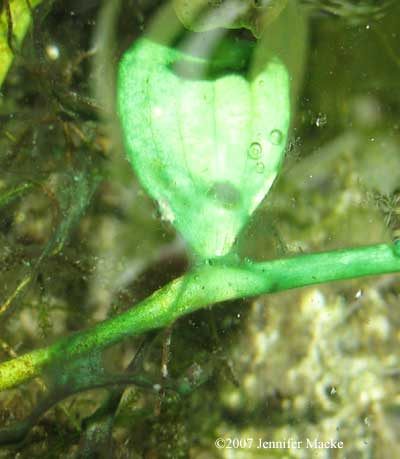
Blue-green algae (BGA) is a form of bacteria, not an alga. It is easy to remove, as it does not cling tightly.
Algae
Aquarium algae are not really bad. In fact, algae have many of the same benefits as live plants in an aquarium: they produce oxygen and consume excess nutrients. If you can tolerate their appearance, algae are best left alone. There are various kinds of algae you may find in your tank. None are a cause for alarm. For information about specific types of algae, see links at the bottom of the page.
Tanks that have been set up and running for a period of time (over 1 year) usually do not have serious algae problems, unless the water quality has not been maintained well. Here are some practical methods for reducing the amount of algae in your tank:
- Reduce the amount of light. Move the tank away from the window, or run the aquarium lamp less.
- Do partial water changes more often. This will help reduce the level of nitrates and phosphates in the water, thus providing less fertilizer for the algae. If you have a significant amount of algae, do more water changes, up to 25% of the water daily for several weeks. Then go back to the normal recommended water changes of 10-20% per week.
- Roll up your sleeves. In most cases, getting rid of algae requires you to pull it out or wipe it off by hand. An aquarium cleaning pad will remove most algae from glass, but some kinds require a straight-edge razor blade to scrape off.
- Get a snail. However, snails tend to be somewhat selective about what kinds of algae they will eat, and some kinds of algae (such as black brush algae) will escape them entirely. Also, some large snails may pose a threat to your amphibians (see Species Mixing Disasters).
- Add a fast-growing live plant, such as guppy grass (Najas guadalupensis). The plants will help consume nutrients, making it harder for algae to grow.
- Allow some algae to grow in inconspicuous places. The algae that is allowed to grow will consume nutrients, thus making it less likely that algae will erupt in the places where you don't want it. Managing algae is NOT the same as weeding your garden, where you want to eradicate every last weed!
- Be patient. Keep up with regular tank maintenance. After a tank is well established (over 1 year without any tear-downs), algae problems will usually subside.

Hydra resemble tiny sea anemones.
Blue-green algae can be killed by treating the whole tank with a product called "Slime Remover". To be on the safe side, remove the animals during treatment, and do several large water changes before returning the animals to the aquarium.
Avoid using "Algae Destroyer" products. They are a needless expense, and nobody knows for certain if these products are safe for amphibians. Better safe than sorry, especially considering that most algae itself is harmless.
Do NOT try to solve an algae problem by getting a catfish or other algae-eating fish. Some of these have been known to injure or even kill amphibians. Newts and frogs have been impaled by the spines of cories and other catfish. Axolotls have gotten sores from being "sucked on" by sucker fish (plecos). For real-life examples of this, see Species Mixing Disasters.
Do NOT try to solve an algae problem by tearing down the whole tank and cleaning everything. In order to maintain the stability of your animals' home, it is better to address the problem step-by-step using the strategies outlined above.
Worms, Snails, and Other Critters
A healthy aquarium hosts many kinds of organisms, including all sorts of tiny invertebrates. They can range from microscopic to an inch long, and are often seen crawling along or sticking to the glass on the inside of the tank. If you have access to a microscope, look at some of your tank debris. You will probably be shocked by the variety of living creatures you see.
How did these critters get into my tank!? Some of them arrive as hitchhikers on live plants, live foods, or the animals that we put into the tank intentionally. Others arrive as spores from local ponds, carried into our houses by wind or dirt.
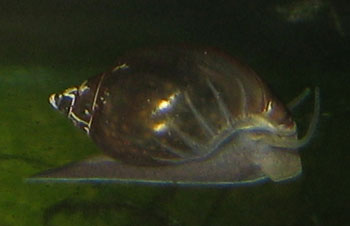
Common pond snail, which often arrives on live aquarium plants.
Here are some common types of tank critters visible to the naked eye.
- Snails. Small snails are harmless in an aquarium. Some people think they are a plague, but they cause no harm to newts. The only harm done by snails is that some will eat aquarium plants. But in most cases, small snails eat only debris and the dead parts of the plants. There have been cases of snails crawling on top of newts, or even laying their eggs on a newt. I have heard of these things happening, but never heard of any harm coming to the newt as a result. Some newts like to eat small snails. Large snails may pose some danger to newts. If they close down hard on a newt's foot or head, injury can result. For real-life examples of this, see Species Mixing Disasters.
- Hydra: looks like a tiny sea anemone.
- Planaria.
- Limpets.
- Tiny worms. Some kinds of worms may swim freely or make tiny tunnels along the bottom of the tank. Some of these are called "threadworms" due to their resemblance to tiny threads.
- Leeches: live blackworms can come with small leeches, but these do not infect newts.
- Additional critters, with photos, are posted on a separate page:
CC Aquarium Invaders Part 2.
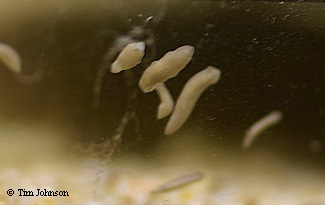
Planaria: small flat worms that cling to glass.
Most tank critters do not cause any harm. The only time you should be alarmed is if you see micro-organisms hanging directly on your animals. Amphibians can get ick and other external parasites, and these are cause for concern and treatment.
What to do if you have tank critters:
- Reduce feeding. Leftover food can fuel large outbreaks of tank critters.
- Remove them manually by wiping them off and/or siphoning them out. If they are snails, pick them (and their eggs) off and throw them away.
- Do a better job removing all uneaten food and waste products.
- Do a better job adhering to scheduled water changes: at least 10% per week, perhaps more until the critter epidemic subsides.
- Be patient. In most cases, we only notice tank critters when they suddenly explode in number. If you wait, they will almost always decrease as their food supply dwindles. Over the long run, they may also be controlled by the growth and competition of other micro-organisms, both seen and unseen.

Threadworms: tiny, thread-like worms. There is also a limpet visible just below the newt's nose.
Do NOT tear apart your whole tank and "clean everything" in order to get rid of the critters. If you do, you will need to start over with the process of cycling your tank, and you are likely to do more harm than good to your amphibians.
Additional Resources
- CC Aquarium Invaders: Photographs (Part 2 of this article).
- Guide to Pond Life at Microscopy-UK. Links to photos of all kinds of pond critters, many of which show up in aquariums.
- "What's That Bug in My Aquarium", PlanetInverts.com
- "Bugs you might encounter in your aquarium", AquaticQuotient.com
- Bugs and Worms ID Page on Shrimp Now. Photos and drawings of common aquarium invaders.
- Bugs and Worms Control Strategies on Shrimp Now.
- Snails in the Aquarium article on Petfish.net.
- Aquarium Algae Control article on FishLore.com
- Aquarium Algae ID, an excellent blog article about all aspects of algae control and identification.
- Living with Algae on The Krib.
© 2002 Jennifer Macke. Last updated May 22, 2009.