Axolotl hasn't pooped in 3+ weeks — previous bloating/floating episode, need advice

if she is tubbed.. use two tubs of equal size (preferably glass), fill both with water, add dechlorinator to one whilst leaving other to sit over night (put in air stone), put axolotl in tub which is dechlorinated, after twenty four hours remove axolotl and put her in the other tub, wash used tub well than refill with water and let sit twenty four hours repeat until ready to go in tank, the reason for allowing water to sit twenty four hours is to let any chlorides to vent of without using a dechlorinator, this is to try to reduce oxygen depletion which dechlorinators can cause.
if she is in tank.. fill a tub/bucket which is equal to amount of water being replaced, leave it twenty four hours, remove water from tank and add water from tub/bucket then refill tub/bucket ready for next water change.
an air stone can be added to the tub/bucket helping to oxygenate it for when needed.
be aware that whilst she is in low levels of water the ammonia levels will rise faster, these will need monitoring.
use 2g/l non-iodised salt in any water that she is in, this will help reduce affects from any ammonia spikes and will help with the damaged/regressed gills.
ensuring an adequate carnivore diet will help protect organs, make sure your ph kh gh are within ideal levels, if they aren't good/ideal a solution such as holtfreters may be required.
allowing an air stone/s to be placed in tank/tub without her gulping bubbles may require some thought, perhaps fit under gravel filter (gravel and filter in name only) to allow for airstones to be placed down the tubes which will also circulate water whilst preventing bubble swallowing.
 
Last edited:
if she is tubbed.. use two tubs of equal size (preferably glass), fill both with water, add dechlorinator to one whilst leaving other to sit over night (put in air stone), put axolotl in tub which is dechlorinated, after twenty four hours remove axolotl and put her in the other tub, wash used tub well than refill with water and let sit twenty four hours repeat until ready to go in tank, the reason for allowing water to sit twenty four hours is to let any chlorides to vent of without using a dechlorinator, this is to try to reduce oxygen depletion which dechlorinators can cause.
if she is in tank.. fill a tub/bucket which is equal to amount of water being replaced, leave it twenty four hours, remove water from tank and add water from tub/bucket then refill tub/bucket ready for next water change.
an air stone can be added to the tub/bucket helping to oxygenate it for when needed.
be aware that whilst she is in low levels of water the ammonia levels will rise faster, these will need monitoring.
use 2g/l non-iodised salt in any water that she is in, this will help reduce affects from any ammonia spikes and will help with the damaged/regressed gills.
ensuring an adequate carnivore diet will help protect organs, make sure your ph kh gh are within ideal levels, if they aren't good/ideal a solution such as holtfreters may be required.
allowing an air stone/s to be placed in tank/tub without her gulping bubbles may require some thought, perhaps fit under gravel filter (gravel and filter in name only) to allow for airstones to be placed down the tubes which will also circulate water whilst preventing bubble swallowing.
Is feeding still recommended while she has gas bloat? Many posts from Chinese keepers state that food can ferment inside the gut and produce more gas. I’m unsure whether I should keep feeding her. I’m also worried this condition may progress into gastroenteritis. Her legs and tail are still floating, and this has lasted for a week now. I’m really concerned about her.
 
if she is tubbed.. use two tubs of equal size (preferably glass), fill both with water, add dechlorinator to one whilst leaving other to sit over night (put in air stone), put axolotl in tub which is dechlorinated, after twenty four hours remove axolotl and put her in the other tub, wash used tub well than refill with water and let sit twenty four hours repeat until ready to go in tank, the reason for allowing water to sit twenty four hours is to let any chlorides to vent of without using a dechlorinator, this is to try to reduce oxygen depletion which dechlorinators can cause.
if she is in tank.. fill a tub/bucket which is equal to amount of water being replaced, leave it twenty four hours, remove water from tank and add water from tub/bucket then refill tub/bucket ready for next water change.
an air stone can be added to the tub/bucket helping to oxygenate it for when needed.
be aware that whilst she is in low levels of water the ammonia levels will rise faster, these will need monitoring.
use 2g/l non-iodised salt in any water that she is in, this will help reduce affects from any ammonia spikes and will help with the damaged/regressed gills.
ensuring an adequate carnivore diet will help protect organs, make sure your ph kh gh are within ideal levels, if they aren't good/ideal a solution such as holtfreters may be required.
allowing an air stone/s to be placed in tank/tub without her gulping bubbles may require some thought, perhaps fit under gravel filter (gravel and filter in name only) to allow for airstones to be placed down the tubes which will also circulate water whilst preventing bubble swallowing.
At first she passed one complete solid stool, but in the following days her droppings became small and buoyant. I would appreciate any advice regarding this stool condition.
 
at this moment in time tub her in water that is just over her dorsal fin (so that she is fully submerged but her feet touch the floor), feed her at night (bloodworm, worms, salmon, shrimp, fish etc..), change 100% water in morning, repeat process until she no longer floats, ensure the water is cool/cold above 10°c but bellow 18/19°c (15°c preferable), add 2g/l non-iodised salt to any water used.
whilst she is being tubbed test the tank to ensure it can cycle 4ppm ammonia per day.
whilst she is tubbed she can be given methyline blue + acriflavine baths (mixed together half fish dose 10-15 mins per day, only do treatments in tubs never in tank) to prevent bacterial infection in gut.
 
at this moment in time tub her in water that is just over her dorsal fin (so that she is fully submerged but her feet touch the floor), feed her at night (bloodworm, worms, salmon, shrimp, fish etc..), change 100% water in morning, repeat process until she no longer floats, ensure the water is cool/cold above 10°c but bellow 18/19°c (15°c preferable), add 2g/l non-iodised salt to any water used.
whilst she is being tubbed test the tank to ensure it can cycle 4ppm ammonia per day.
whilst she is tubbed she can be given methyline blue + acriflavine baths (mixed together half fish dose 10-15 mins per day, only do treatments in tubs never in tank) to prevent bacterial infection in gut.
Hello, I currently have her in tubbed quarantine with the water level just above her dorsal fin. She is still floating on her hind legs and tail. I already have methylene blue on hand, which is a common medication.
Acriflavine seems quite hard to source. When I searched online, most results were veterinary formulations intended for livestock like pigs and cattle. I also found an aquarium quarantine product labelled acriflavine hydrochloride — could this be the correct one?
Do I mix methylene blue and acriflavine together in the same bath? What are the dosages?
Can non-iodised table salt be used?
Is it okay to continue Epsom salt (magnesium sulfate) baths?
I have seen many Chinese axolotl keepers treat similar floating symptoms with gentamicin baths. Would you recommend gentamicin?
At this stage she shows no signs of gastroenteritis; her cloaca is not swollen or red. She does produce floating faeces, and has not passed any waste for the last five days. She did defecate a few days before this tail floating issue started.
Thank you!
 
0.5ml per 10 litre methyline blue + 1.5ml per 100 litre acriflavine (these calculations are based on dosages using nt labs medications half fish dose)
see https://ambystoma.uky.edu/genetic-stock-center/newsletters/Older_archive/Issues-1-12/archive/Issue 3/09-16brothers.pdf for more info/accurate dosages.
gentamicin is a broad spectrum antibiotic also see above link
acriflavine hydrochloride is correct.
Many many thanks!Wishing you and your salamanders health and well-being.
 
0.5ml per 10 litre methyline blue + 1.5ml per 100 litre acriflavine (these calculations are based on dosages using nt labs medications half fish dose)
see https://ambystoma.uky.edu/genetic-stock-center/newsletters/Older_archive/Issues-1-12/archive/Issue 3/09-16brothers.pdf for more info/accurate dosages.
gentamicin is a broad spectrum antibiotic also see above link
acriflavine hydrochloride is correct.
I found another axolotl owner whose pet has symptoms very similar to mine. They took their axolotl to a reptile-focused exotic vet, who ran a CT scan and faecal examination. The faecal test revealed large amounts of fungi, plus low levels of parasites that were not considered pathogenic. The vet prescribed oral antifungal medication alongside liver support supplements. I plan to feed my axolotl small meals, and once she produces stool, I will take her in for a full workup as well.
 
Many many thanks!Wishing you and your salamanders health and well-being.
Have you ever observed fungi in axolotl stool? Can fungi lead to axolotl bloating? I understand Saprolegnia is a fungus, yet it does not colonise an axolotl’s intestinal tract. I have some doubts about this vet’s reliability.
 
The problem is :
There are many fungi species and most of them are opportunistic and feed on any organic matter they find.
Generally speaking, finding a fungus anywhere is not sufficient to say this fungus is pathogenic.
Moreover, it's also necessary to check if there is such fungus in healthy axolotls.
 
Thank you for the information you provided. After reading it, I’m wondering: since there are no cotton‑like hyphae on her body surface, does that mean she is not infected with Saprolegnia for the time being? I regularly clean the fish tank with methylene blue.

She still hasn’t defecated and is suffering from the floaty bum syndrome. She still has an appetite, but lately she has been rather quiet and mostly sleeping most of the time. When she was healthy before, she was very active much of the time. I am not sure whether she will recover. I live in constant fear of losing her.

I have read relevant posts on forums. Some people say putting an axolotl in the refrigerator will make it defecate, yet I am worried this may trigger stress due to excessive temperature difference, so I have not tried it. Likewise, I have never put ice cubes into the tank for fear of drastic temperature swings.

I am going away for four days. A friend will come to change the water once while I am gone. Can I raise the water level?

I’m really sorry to trouble you every day. Her condition over the past three months has left me worried and helpless.
 
The problem is :
There are many fungi species and most of them are opportunistic and feed on any organic matter they find.
Generally speaking, finding a fungus anywhere is not sufficient to say this fungus is pathogenic.
Moreover, it's also necessary to check if there is such fungus in healthy axolotls.
you are right! thank you!
 
this might be a daft question but have you cycled your tank/filter ie.. its capacity to remove 4ppm ammonia in 24hrs, the reason I ask this is due to you saying that you use methyline blue in the tank regularly which will destroy beneficial as well as harmful bacteria which will therefore damage your tanks/filters cycle causing increases in ammonia/nitrites (although methyline blue is a treatment for nitrite toxicosis) which will cause surface gulping and reduced/regressed gills.
the fungal infection which some axolotls are prone to normally effects/attaches to the gill filaments looking similar to little tufts of cotton wool, there are cases of the infection spreading to other areas but is luckily quite rare, there are cases of dusty mold (more noticeable on darker skinned axolotls) which attaches to the skin surface which can be treated the same as fungal infections but can be exacerbated by stagnant water in caves/hides etc..
 
this might be a daft question but have you cycled your tank/filter ie.. its capacity to remove 4ppm ammonia in 24hrs, the reason I ask this is due to you saying that you use methyline blue in the tank regularly which will destroy beneficial as well as harmful bacteria which will therefore damage your tanks/filters cycle causing increases in ammonia/nitrites (although methyline blue is a treatment for nitrite toxicosis) which will cause surface gulping and reduced/regressed gills.
the fungal infection which some axolotls are prone to normally effects/attaches to the gill filaments looking similar to little tufts of cotton wool, there are cases of the infection spreading to other areas but is luckily quite rare, there are cases of dusty mold (more noticeable on darker skinned axolotls) which attaches to the skin surface which can be treated the same as fungal infections but can be exacerbated by stagnant water in caves/hides etc..
I did have a fully cycled main tank. Once summer came, I moved him into a small tank so I could place it inside a cooling incubator. Only this small tank fits into the cooler.
At first, the small tank had no sponge filter, but I performed near-daily water changes with temperature-matched water. Later I added a sponge filter, and I believe the nitrifying bacteria colony has become established. I tested the water with liquid test kits, and ammonia, nitrite and nitrate are all within safe ranges.I also remove the sponge filter during tank cleaning.
Thank you. If he is able to recover, I will use alternative cooling methods in future summers and keep him in the main tank whenever possible.
 
this might be a daft question but have you cycled your tank/filter ie.. its capacity to remove 4ppm ammonia in 24hrs, the reason I ask this is due to you saying that you use methyline blue in the tank regularly which will destroy beneficial as well as harmful bacteria which will therefore damage your tanks/filters cycle causing increases in ammonia/nitrites (although methyline blue is a treatment for nitrite toxicosis) which will cause surface gulping and reduced/regressed gills.
the fungal infection which some axolotls are prone to normally effects/attaches to the gill filaments looking similar to little tufts of cotton wool, there are cases of the infection spreading to other areas but is luckily quite rare, there are cases of dusty mold (more noticeable on darker skinned axolotls) which attaches to the skin surface which can be treated the same as fungal infections but can be exacerbated by stagnant water in caves/hides etc..
Hi, sorry to bother you again. She is still having persistent tail-up buoyancy. I’ve given her two baths with magnesium sulfate dosed at 0.1 g per litre, but she hasn’t passed any faeces and her symptoms haven’t improved. I’ve noticed her left abdomen looks a little bloated. When I gently touched it, it felt soft. I’m not sure if it is gas or something else. Her tank is bare-bottom.

I’ve read posts about the fridging method. My fridge’s refrigerator compartment runs at 4°C, while the tank temperature is currently 17°C. Gradually cooling her down will be a bit difficult for me. Also, is 4°C too cold for axolotls? Would you recommend trying it? She has had this tail-floating issue for nearly two weeks. Could this become life-threatening if it continues?

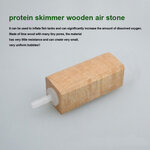
You recommended a wooden air stone. Do you have any brand suggestions or photos? I can’t quite picture what it looks like just from the description. Thank you so much for your help, I really appreciate it.
 
the magnesium sulphate is at the level that she can be kept in it rather than as a bath.
although there are axolotls that have been successfully fridged there are also axolotls that have passed away due to fridging, bellow 10°c axolotls become sluggish and their appetite is reduced, below 8°c their organs reduce function with a risk of shut down, fridging should be a last resort due to risk.
 

Attachments

  • wood air stone.jpg
    wood air stone.jpg
    24.4 KB · Views: 3
the magnesium sulphate is at the level that she can be kept in it rather than as a bath.
although there are axolotls that have been successfully fridged there are also axolotls that have passed away due to fridging, bellow 10°c axolotls become sluggish and their appetite is reduced, below 8°c their organs reduce function with a risk of shut down, fridging should be a last resort due to risk.
Thank you. I took her for an X-ray this afternoon. The scan shows large gas bubbles on both her left and right sides. We are waiting for a faecal test to find out what is causing the bloat. I still suspect the bloat was caused by her ingesting air bubbles.I will be away for four days. I will remotely control the air conditioner to maintain the water temperature. Let her rest quietly for a few days to fully recover.
I have seen your photos and found a similar item on our online platform. I will purchase one to try. Thank you so much. I am terrified of losing her every single moment, and I appreciate all your help.
 

Attachments

  • 345a46c67097ec0dcfbe16fb8e63cc46.jpg
    345a46c67097ec0dcfbe16fb8e63cc46.jpg
    66.8 KB · Views: 3
General chit-chat
Help Users
  • No one is chatting at the moment.
    There are no messages in the chat. Be the first one to say Hi!
    Back
    Top