Setup just not working out.

lilacdragon7

New member
Joined
May 13, 2008
Messages
59
Reaction score
2
Points
0
Country
United States
Display Name
Lilacdragon7
Alright, things seemed to be working... till today.

At first it was a gathering process. I bought my tank (20 gal tall) and filter (under gravel, one charcoal filter hooked up to one small Whisper air pump for 10 - 30 gal). I bought my substrate. I bought my log. . . I rinsed off each thoroughly, or so I thought. I set it up, had the filter running, substrate in, and log setting. Unfortunately, the log promptly started turning the water brown. :confused:

I started to do 50% water changes, left it for the filters, and started looking for plants. I now have Java fern, mondo grass, some type of sword plant, and lucky bamboo (3 stocks) hanging out in there. The water seemed to be improving. I also placed 4 whisker shrimp in there to kick start the cycle. This whole while I'm doing random water tests for Nitrite and Nitrate, which were the only test I had at the moment. Each were coming up 0ppm. Sunday, 5/18 I tested the water for Nitrate, Nitrite, and Ammonia (API), all coming up 0ppm. I did a 50% water change to help the color of the water; of course I'm using treated water the whole time (API Tap water Conditioner). I feed the shrimp a block of blood worms and leave things to go about their business.

Today, Tuesday, 5/20 at 8:30am I temp the water at 61F. I test the water again for all the above, Nitrates and Nitrites are non existent, ammonia - .50ppm.
I do my water change and check the quality of water and life with my eyes. My largest shrimp seemed lethargic. I could nudge him with the foot of a fixture, he wouldn't budge, but just let the water push and pull him around. He almost let me squish him; if it weren't for me double checking for some transparent shell and whiskers I would've killed him. I don't move things in my tank much at all, but I had to take everything out after a closer inspection and finding... fungus growing on the food floating around and fixtures within the tank. Description: white, fuzzy. On the log, some thick green-white gross... thing... was growing.

To fix this, I didn't know what else to do with the tank furniture other than to scald it, but I don't want to put it back in my tank till I know the problem is gone. I poured scalding water over three times, and let it hang out under the shower so the color could seep out of the log. I did a light siphon in the place which the food drops and melts, and another water change to get out all the floating bits of fuzzy worm. I thinned out the substrate.

Any advice? I've had this setup for about two weeks now, I was hoping to get newts soon, but I don't want to make any commitments till I have a clean tank. Right now I have a tank with thin substrate, (so far as I can see) 3 shrimp, a yellowing mondo plant, and a few other seemingly strong plants. TWO charcoal filters, hooked up to two small whisper air pumps (I have the filters facing the glass so the bubbles don't disturb the water's surface too much. The current isn't strong at all, but hopefully more adequate at filtering.)

Anyways, I'm looking for some advice with cleaning and possibly a good light to help plants grow but leave cynops p. unharmed.

Sara

P.S. just temped my water again. Still at 61F, at the hottest part of the day.
 
Last edited:
What kind of wood is it?
Some will leach into the water for what seems like forever.

For lighting I suggest fluro tubes or CFL's. Daylight provides the best spectrum but tend to be expensive. Warm white bulbs will produce acceptable light for vegetative growth.
Depending on water depth and plant types you'll require 2-5 watts per gallon. With a tall tank I'd aim for the upper estimate of that. Obviously depends what you can mount in your hood.
I'm dying to try a 150W Envirolite(plant growing bulbs) in a tall tank. Try googling for horticultural bulbs and see if you can find anything that suits.
 
By having live plants in the tank, they'll take up ammonia and nitrites, so you will get low readings when you have lots of plants.
 
As far as the log is concerned. (not sure if you have clear water yet or not). When ever I get a new piece of drift wood, I try to boil it a few times. I put it in a pot, boil it for about 5 minutes. The water should be pretty brown. Then I change the water and boil it again. I do this a few times, until the water is pretty much clear. (you will never get the water totally clear). But this will remove the majority of the coloration in the water. This would also sterilize it as well. If the wood is too big, boil one end first and then the other. Or find a bucket and put hot water in it and keep changing the water.
 
Mondo grass is not an aquatic plant, even though it's often sold as one. Take it out before it melts and makes a mess.

An expensive, but effective way to leach the tannins out of fresh wood is to hang it in the shower and run hot water over it. When your hot water runs out, shut it off and wait for the tank to reheat and repeat the process. Personally, I just let it leach into the water. Filtration through activated carbon and weekly water changes will remove the tannins eventually, and other than coloring the water it's fairly harmless.

Very bright and/or specialized light fixtures for growing aquarium plants aren't the best idea unless you're willing to monitor nutrient levels or fight with algae. I'd recommend a plain old single tube florescent canopy with one daylight tube, and stay away from high light required plants, but to each his own. Also, more light = higher water temperatures.

Good luck.
 
I agree about the wood - remove it and soak (or boil) until most of the brown color comes out.

I think your mistake was to feed the shrimp an entire cube of bloodworm. When cycling a tank, you should only feed the animals their "normal" amount of food. A few shrimp only need a couple of tiny flecks of bloodworm.

I don't think you needed to scald the furnishings. The rotting food was undoubtedly gross, but I think it would have been sufficient to remove the uneaten food and change most of the water.

You're on the right track, good luck from here!
 
Alright, time to report back.
The log is far too large for any of my pots, I stuck it in the shower, poured boiling water over it, and let the hot shower work on it while I boiled more pots. The water was pretty much clear going down the drain, so I stuck it back in the tank. I was talking with an old friend of mine, after posting my thread, and he said my shrimp would not be able to live on just blood worms, he said they would need something similar to what they feed crabs, for their exoskeleton. SO! After this and Jen's observation on the block of blood worms being too much, I found a bottle of crab bites... the shrimp LOVE THEM! I can sprinkle only a small amount around wherever the shrimp are and there whiskers catch the scent and they dive in for it. So I don't feel like I'm over polluting the tank and the shrimp are getting the nutrients they need.

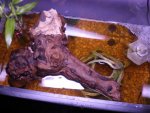
God KNOWS I don't want to mess with algae. So I think I'll stick with my 15 watt florescent lighting. Thank you for the tips on the plants. I've removed the Mondo Grass and now wonder what to put in it's place. I was hoping to get Java Moss from the breeder I get my newts from, I attached a few pictures, there's a grove-ball I want to stuff the java moss in. I'm thinking it would make a cute play ground, unless there are suggestions to do otherwise.

I'm going to keep up with the tests, now that I've lost a plant, I'm concerned with a spike. If a spike occurs, I simply do a 25-30% water change and leave it at that? or is it apart of the cycling, should I just leave it and keep an eye on it with more tests? My test kits come with fixes, if there's too much ammonia or nitrate or nitrite, should I head to the store and buy their solutions? It's been a while since I've done this, and never with such a large tank. I was thinking testing every other day and water change once every week (for the color). Filter change once every two weeks, I have two filters, I could change one out and leave the other for the next change. How many times should I siphon in a week?

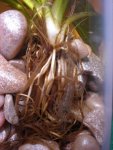
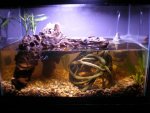
Some pictures for you to better visualize what were working with. Granted the plants aren't very big, yet. I'm hoping things with flush out nicely, I'm really looking forward to getting some Java moss.

[NO! the shrimp is not buried or squished, but hiding in the roots. I've left him to his business and he seems to have made a nice little home.]
 

Attachments

  • 011.JPG
    011.JPG
    70 KB · Views: 435
  • 015.JPG
    015.JPG
    71.6 KB · Views: 441
  • 020.JPG
    020.JPG
    78.5 KB · Views: 379
Very bright and/or specialized light fixtures for growing aquarium plants aren't the best idea unless you're willing to monitor nutrient levels or fight with algae. I'd recommend a plain old single tube florescent canopy with one daylight tube, and stay away from high light required plants, but to each his own. Also, more light = higher water temperatures.

Thats only really true of halide and sodium lighting, not so much CFL's.

Lilacdragon, whilst a single 15w tube will keep java just fine anything else wont grow so well. You should aim for plants with very low light requirements and dont expect much normal growth.
 
growl, as long as my plants aren't melting. Should I upgrade to a 20 watt? I don't want anything crazy taking over my tank, but I want my plants to be well off for the tanks sake. I should be getting another plant, anubis (I know that's not the right spelling); broad leaf plant. The plants are just as important to me as the newts themselves.

I was thinking of going for an Aqua Glow, http://www.aquahobby.com/products/e_aquaglo.php. My friend uses this light, his tank is flourishing, no algae, but a monstrous ribbon plant, and gigantic anubis (sp?). The fish are so very happy. What do you guys say?

If not, can I get some suggestions on low light plants?
 
Last edited:
The tubes that supply air to your little filters... do they pass under the screen lid? If so, see
http://www.caudata.org/cc/articles/escape.shtml

Yes, if you get an ammonia spike, just do larger more-frequent water changes. Once a week siphoning, as part of the water change, should be enough.
 
Hey thanks Jen! I do have the tubing running under the lid, FOR NOW! I will be cutting tiny holes for the tubing, I was always planning on this. This page gave me a few good ideas for making my tank a little more secure, so again, thanks. Also thank you for the tips on water care.


Sara
 
Last edited:
I have a comment on your filters. Do I get you right, that the filter medium is charcoal?
Charcoal is not meant to be used permanently, but only under special circumstances (for instance to remove medicines from the water).
The charcoal will accumulate some chemicals and if it has reached its maximum load, these chemicals might be reintroduced to your water again. Also charcoal should be thrown away after usage for the chemicals can not be removed by simply washing it.
So I would advice you to change the filtration material after some time, maybe you could use some foam, a sponge or something porous.

Good luck with your tank!
 
Hmmm. Thanks for bringing that to my attention. I checked. . . They're CARBON filters. Oops, I believe I've been telling everyone wrong. Same difference? Good idea on the foam, never thought of that, might use it in a pinch if needed.

Sara
 
Hi Sara,

Carbon is the same thing. You should not have in in your filter for more than 2 weeks.

-Eva
 
Hello Sara,

Charcoal is not meant to be used permanently, but only under special circumstances (for instance to remove medicines from the water).

I have placed activated charcoal/carbon in my tank since I first set it up and have never experienced any problems with the chemical media leaking chemicals/pollutants back into the tank. I tend to change the chemical media every two months.

As to whether substances that have already been adsorbed onto the chemical media can be re-released into the tank, well the simple answer is no. Sure the chemical media can be spent and thus rendering it useless but the substances can not leak back into the water. In order to release substances from an ion-exchange medium, you'd have to wash salty brine or an extremely acidic or alkaline solution. There is only one exception to this, and that is if an ionic substance that has a stronger electrical charge that the one adsorbed on the chemical media were to replace the adsorbed substance, which has the weaker charge.

If you would like more information about activated carbon/charcoal, you can view the thread provided:

http://www.caudata.org/forum/showthread.php?p=145300#post145300

Another thing about activated carbon/charcoal is that it must be activated. That is, it can't be just carbon or charcoal. These two forms of chemical media are practically useless, so to speak.

Also, algae is more likely to proliferate when it is provided with a light source that has a wavelength of approximately 450nm. Therefore, if you could avoid a light source of this wavelength, it could help in reducing the growth of algae. In addition, algae can be 'starved' should it ever grow. By starving it you are effectively reducing the available energy sources which are primarily phosphate and nitrate. Plants can help starve algae.

Anyway, good luck with the rest of your set up!

Jay.
 
How do i know if it's activated carbon and not just carbon. The box just says "carbon filter". Nothing mentions anything about activated.

Man, I'm really appreciating this forum, the members are out of this world smart.
 
Hello Sara,

How do i know if it's activated carbon and not just carbon. The box just says "carbon filter". Nothing mentions anything about activated.

The box should specify if it is activated carbon. If it just says carbon then it isn't activated carbon. Don't worry, I have made the same mistake.

Jay.
 
AH! Darn-it all. Alright, now... I'm going to assume they aren't so hard to find.
Just curious, what the heck are these filters doing now? Nothing?
Can I save my money and just stuff foam in the slots for the filters, I'm not sure I'm going to be able to find "activated" carbon filters to fit this specific filter. (Lee's aquarium and pet products. Premium under gravel filter.) I know a lot of people don't use under gravel filters, but I thought with two filters pulling water, plants, and weekly siphoning as apart of my water changes would be sufficient for three cynops p.

Thank you so much jay!
Sara
 
With just carbon in them? It'll have an effect, but it will be minimal. The process of 'activating' carbon involves treating with heat and chemicals to give it a greater surface area and making it more porous, enabling it to absorb more carbon based(organic) waste from the water. Activated carbon has many tinty pores between the carbon atoms in the material forming bonding sites which allow the carbon to remove impurities from passing water through chemical attraction(Van der Waals force).

Obviously this means that once all those bonding sites are filled the carbon will have no effect. This takes alot longer than 2 weeks, I change my filter carbon between 6 weeks and 3 months depending on bio load. The use of active carbon filtration is not an 'emergency measure', on the contrary it is recommended in any setup producing large amounts of organic waste(animal waste, decaying plants, uneaten food etc)

Filter foam/wool works differently. It catchs particulate matter and gives beneficial bacteria(which in the cycled tank form part of the nitrogen cycle) ideal conditions for colonisation.

Idealy, you should use both.

Undergravel filters are effective, but not recommended for planted tanks as they leech essential nutrients from substrate, disturb/destroy roots and create current detremental to healthy plant growth. As a keeper of planted aquaria for 11 years I suggest you pot your plants individualy in an appropriate substrate if you must use an under gravel filter.
 
Last edited:
Hello Sara,

Just curious, what the heck are these filters doing now? Nothing?
Can I save my money and just stuff foam in the slots for the filters, I'm not sure I'm going to be able to find "activated" carbon filters to fit this specific filter. (Lee's aquarium and pet products. Premium under gravel filter.) I know a lot of people don't use under gravel filters...

It is true that most people do not use the undergravel filter (UGF) system anymore; mainly because the UGF system is out-dated and the undergravel plate causes much havoc when it comes to cleaning. UGF's are most effective when the uplift tube is fitted with a powerhead, this is a common mis-tech.

The filters are doing something- they going through the process of chemical filtration which is what you'd expect from activated carbon. However, the chemical medium (activated carbon) does not provide an effective surface for bacterial proliferation. Thus, I'd recommend that you purchase a sponge or wool for the purpose of mechanical filtration. I personally would go with the former because the sponge has a high surface area which encourages a larger colony of bacteria to inhabit it. The sponge can ultimately can perform both mechanical and biological filtration processes.

If you would like more information on the types filtration, you can have a look at the post provided:

http://www.caudata.org/forum/showthread.php?p=147127#post147127

Goodluck with everything! ;)

Jay.
 
General chit-chat
Help Users
  • No one is chatting at the moment.
    RyanLHawk: Spotted +1
    Back
    Top